
Tall Flat-Bottom Quartz Vessel: Reaching and Supporting a Deep Sample
Custom Design Guides · MQQCR010
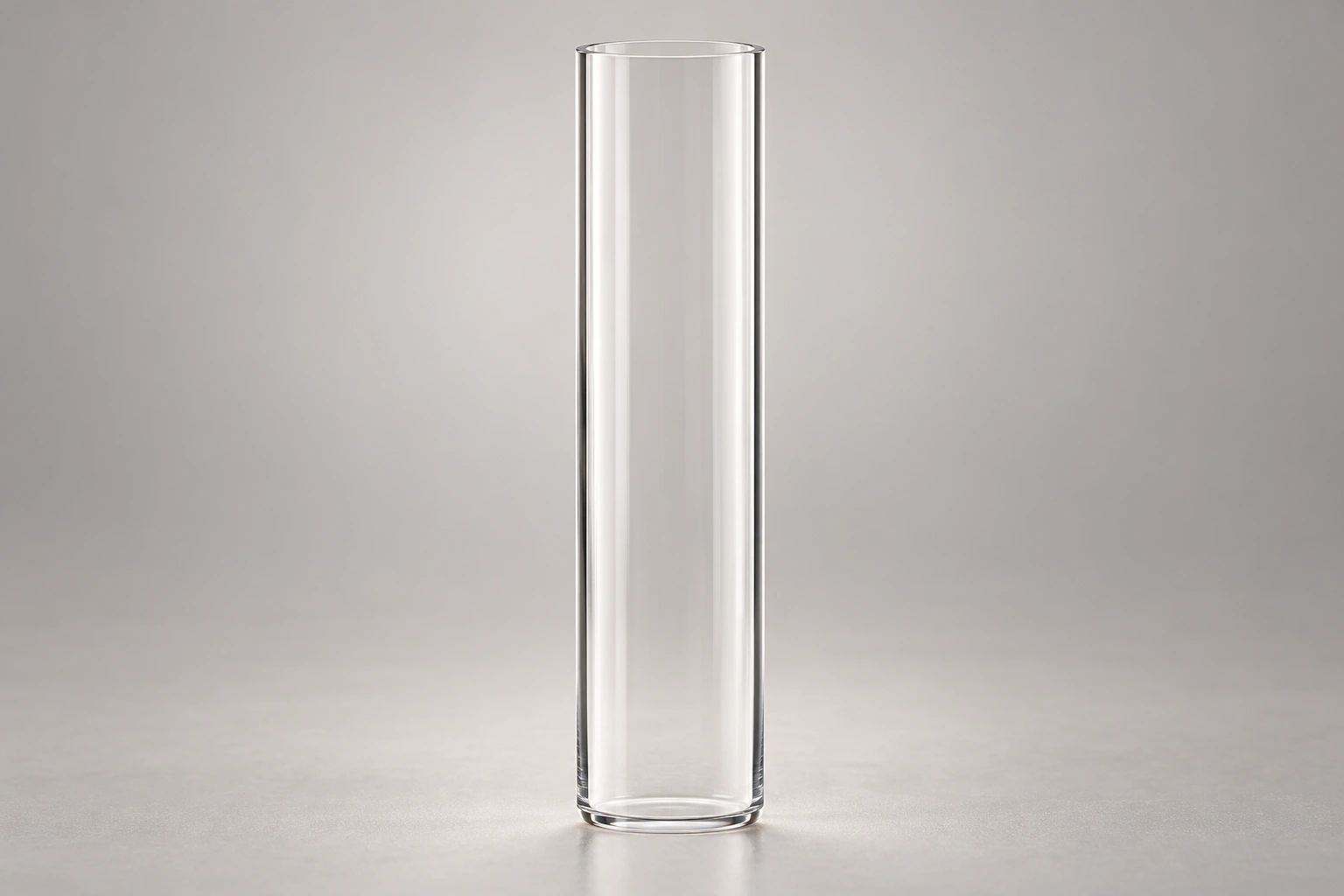
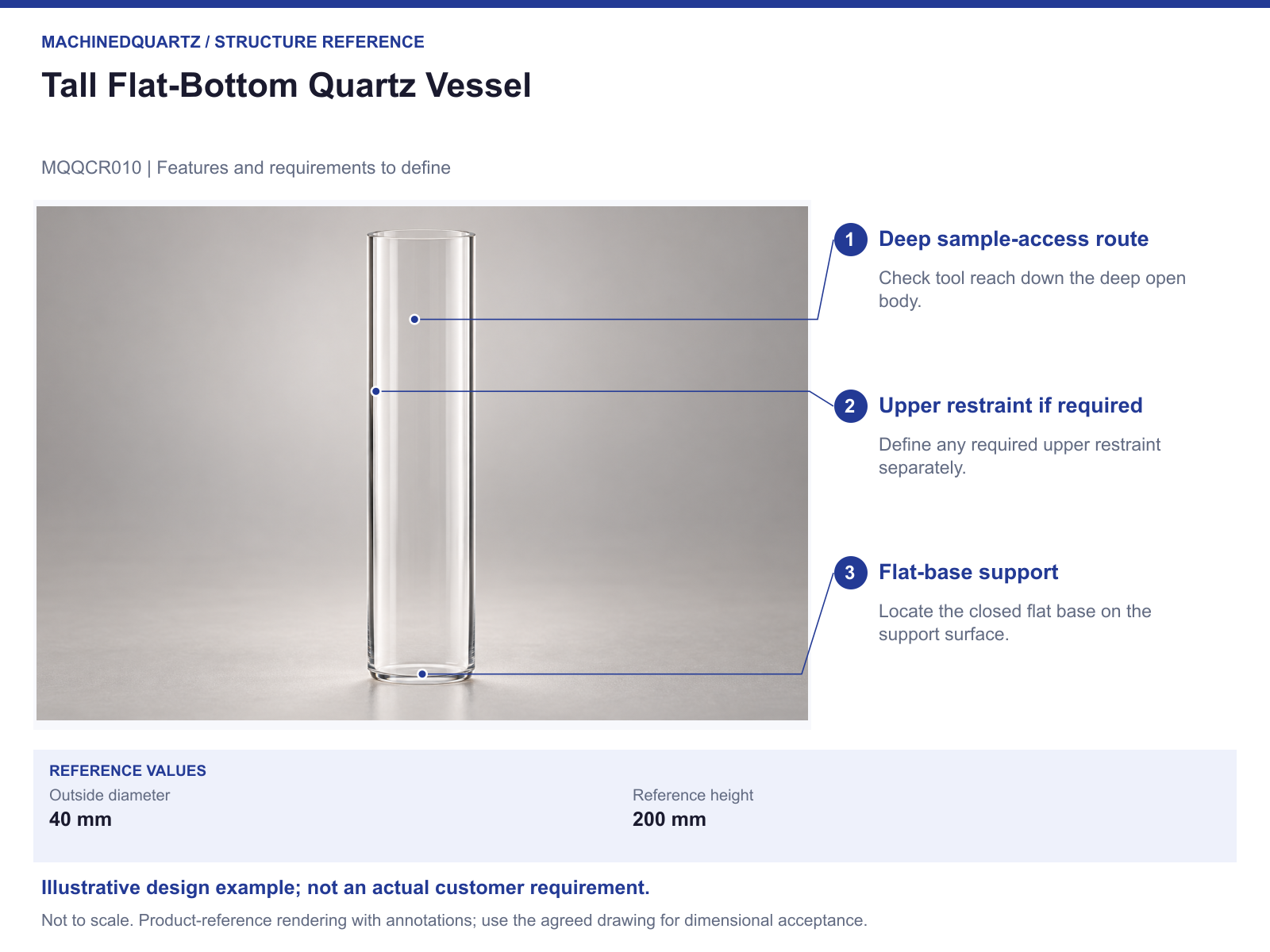
A tall vessel can provide a deep sample space while keeping a flat base. MQQCR010 is the quartz configuration marked approximately 40 mm outside diameter and 200 mm height. The current listing identifies a nominal 200 mL option.
The flat bottom changes how it meets a support compared with a round-bottom tube. It does not by itself establish stability for a filled vessel or make the mouth easy to reach inside an enclosure.
In this guide: Configuration · Design comparison · Show the base contact and the upper support · Reaching the bottom is a separate requirement · Review depth changes with the whole operation · Name the intended process before relying on quartz · Enquiry
The configuration discussed here
What changes from the simpler form?
The flat base gives this tall tube a different lower support geometry from a round-bottom tube. Its depth still makes loading reach and any upper restraint important; the flat end alone does not establish stability in an apparatus.
Show the base contact and the upper support
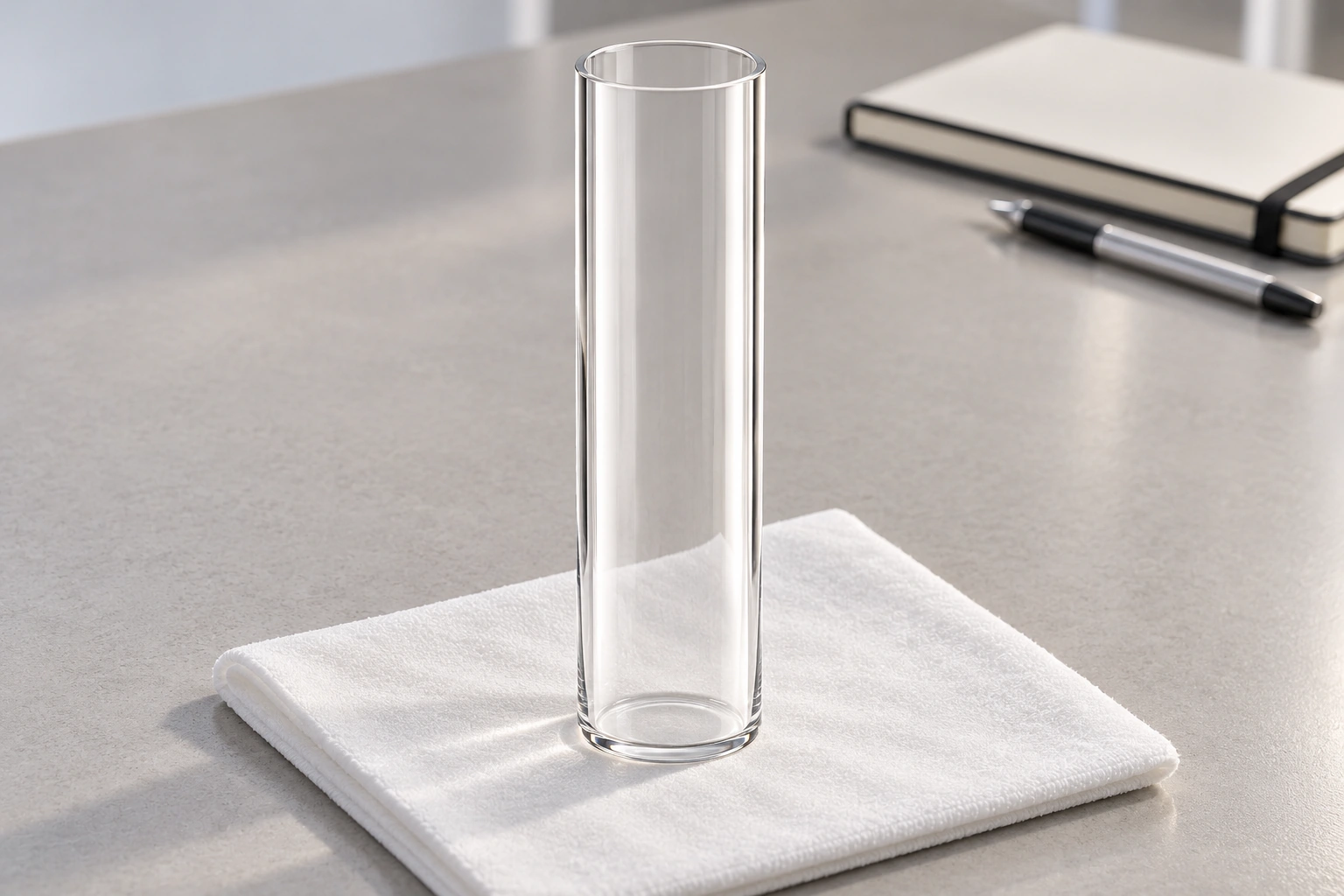
Start with the surface under the vessel and any additional restraint around the body. The outside diameter and height do not define the actual flat contact area or an allowable tipping condition. Include the intended fill and operating sequence in the support review.
If a holder surrounds the upper body, identify the contact height and clearances. The vessel should not acquire an undefined load path simply because a clamp or aperture happens to fit its outside diameter.
Reaching the bottom is a separate requirement
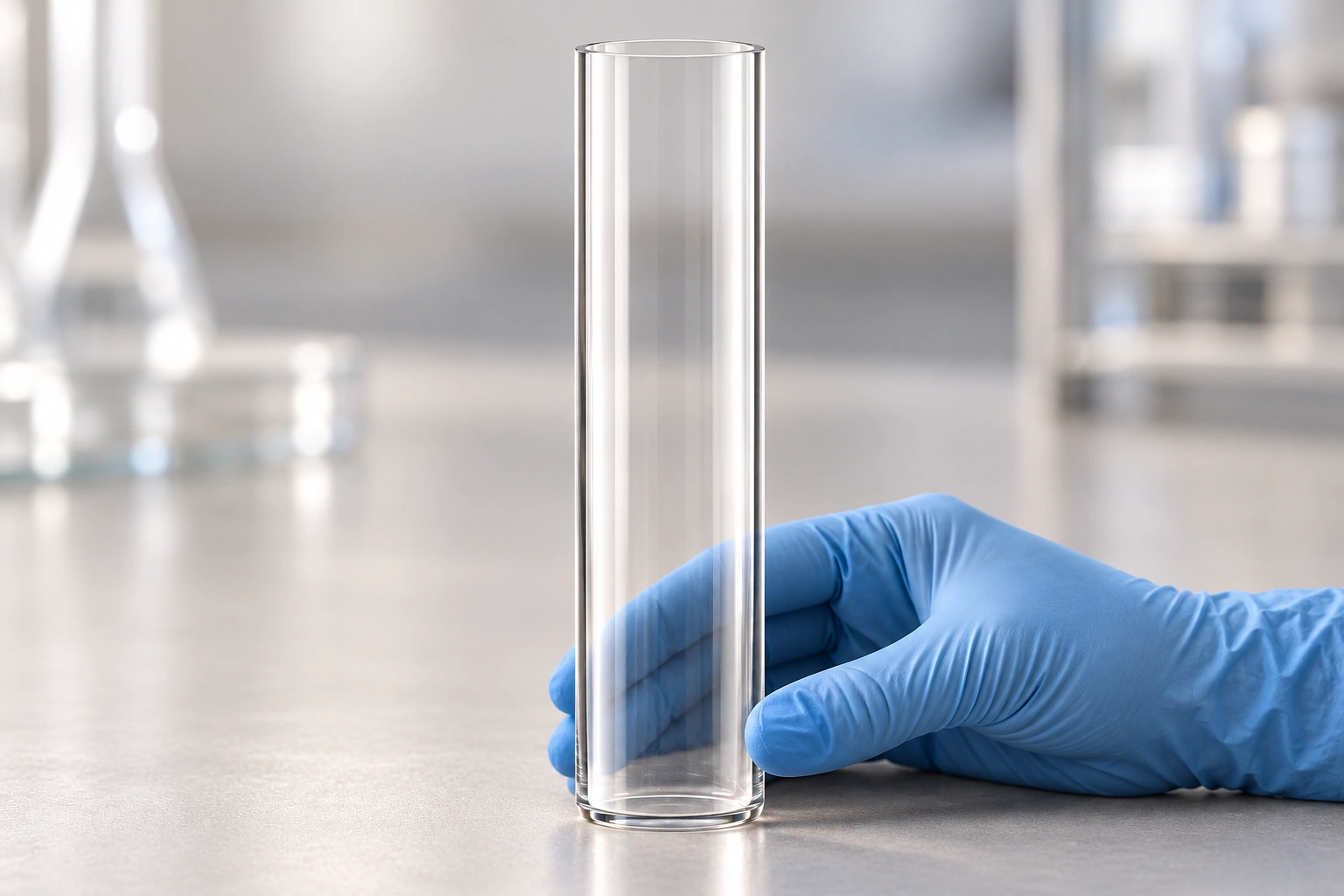
A deep body asks more of the filling, withdrawal and cleaning tools. Give the clear opening, usable tool length and the region the tool needs to reach. The nominal 200 mL capacity is not a minimum working or recoverable volume.
For example, a sample may need to be removed while the vessel remains in a support. Show the tool's approach above the mouth and any obstruction from a lid or nearby equipment. The resulting required space can exceed the 200 mm vessel height.
Review depth changes with the whole operation
A possible modification is to shorten the vessel to suit an enclosure while retaining a required sample amount. Specify the available height, diameter limit and working fill, not only a desired new overall length. The revised chamber and base need a design review.
If the bottom must meet an optical or other functional requirement, state that separately. A flat-bottom container is not automatically an imaging window or a calibrated measurement cell.
Name the intended process before relying on quartz
The material listing does not establish a particular heating programme, chemical compatibility or allowable thermal transition for the complete setup. Provide the actual contents and conditions when discussing the vessel.
Agree dimensional checks at the base, body and opening, along with any trial fit required by the holder. Requested material or inspection documents need a defined scope before quotation.
Structure reference and specification points
Download the structure reference (PDF)
Does the flat bottom mean the vessel can be used unsupported?
No general stability or handling claim is established by the flat-bottom form. Review the filled vessel, support footprint, restraints and operating sequence for the intended arrangement.
Send a drawing or the mating-part details
Provide a support section and a tool-access sketch with the vessel request. MQ can review the deep body in relation to its actual handling task.
- Working fill and sample-access depth
- Base support and any upper restraint
- Maximum body envelope and mouth clearance
- Filling, withdrawal and cleaning-tool reach
- Process conditions, quantity and acceptance requirements
Modified designs are reviewed for the project. The drawing, supplied parts, quantity, inspection scope, price and preparation or production time are agreed in the quotation.
Details to settle for the ordered configuration
Base contact dimensions, permissible loads, optical properties and operating limits require confirmation.


Recent Comments