
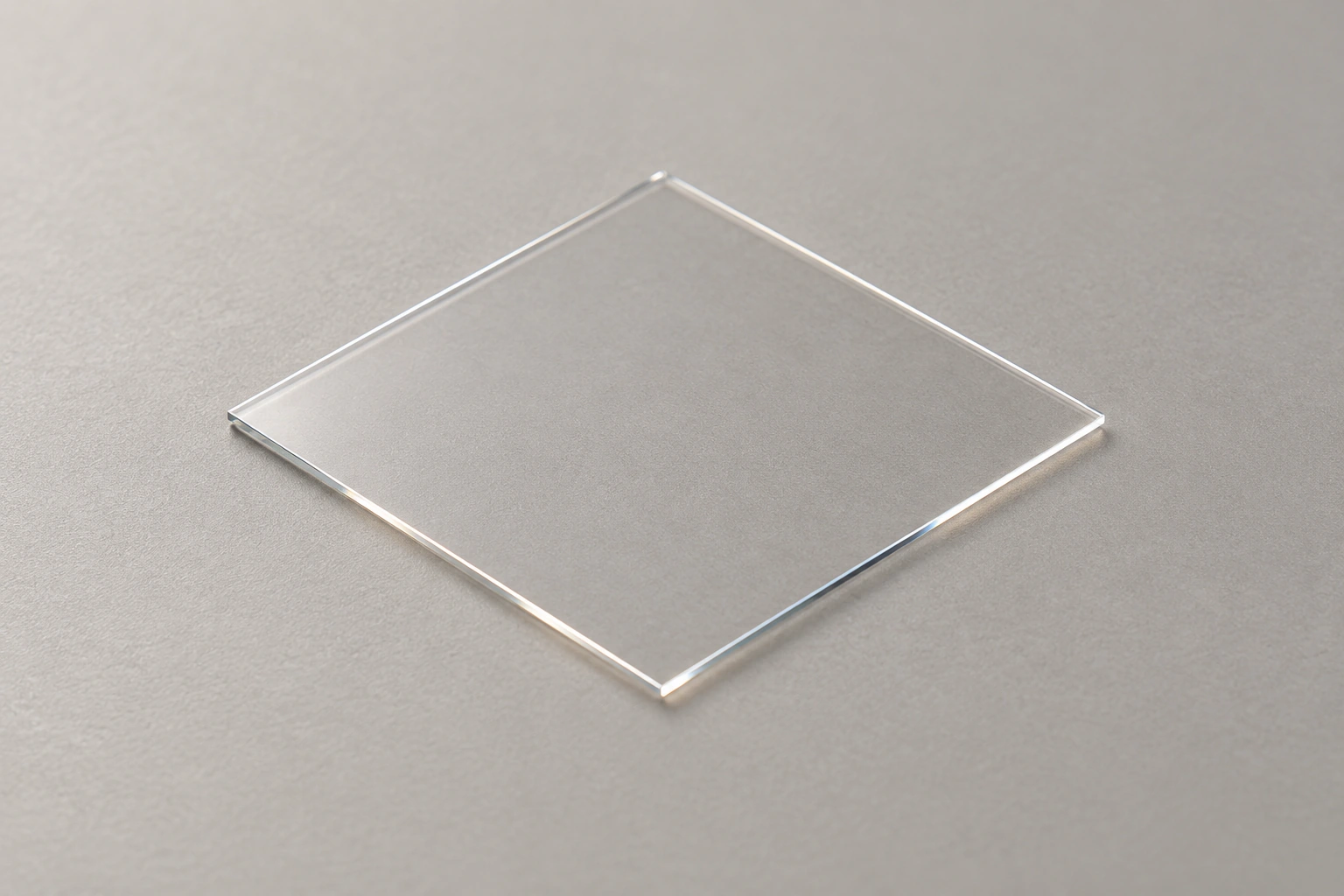
0.1 mm Quartz Window Plate: Defining the Supported Border
Custom Design Guides · MQQPL291
MQQPL291 is the nominal 10 × 10 × 0.1 mm JGS1 quartz-plate option. This is a thin solid plate; the 0.1 mm dimension describes the plate thickness, not a liquid sample path.
For a small window or insert, the holder needs to support the part while leaving the required optical area clear. The selected dimensions identify the nominal option; its tolerances and optical requirements need separate acceptance criteria.
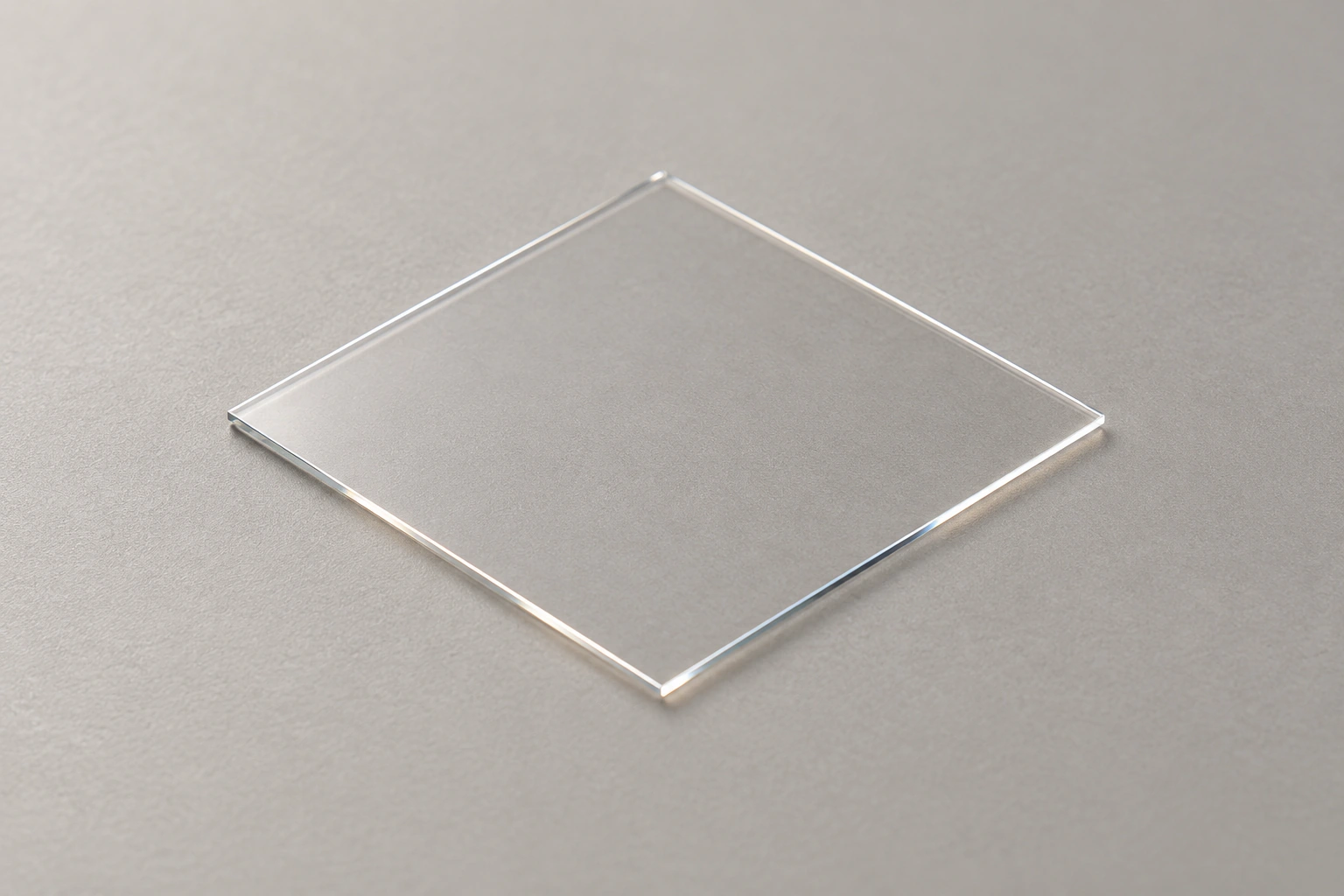
In this guide: Configuration · Design comparison · Separate the plate outline from the clear aperture · Give the operator an accessible edge · State the optical requirement rather than relying on the grade name · Changing thickness calls for a holder review · Enquiry
The configuration discussed here
What changes from the simpler form?
Reducing a quartz window to a thin plate keeps a solid optical element but changes the support and handling problem. The clear aperture, supported border and retention cannot be selected from thickness alone.
Separate the plate outline from the clear aperture
The full 10 × 10 mm outline is not automatically the usable opening in the assembly. Mark the support border and the region that must remain unobstructed.
If the plate sits over a recess, show the seat and any nearby step in section. The unsupported span and the contact geometry need review alongside the plate dimensions.
Give the operator an accessible edge
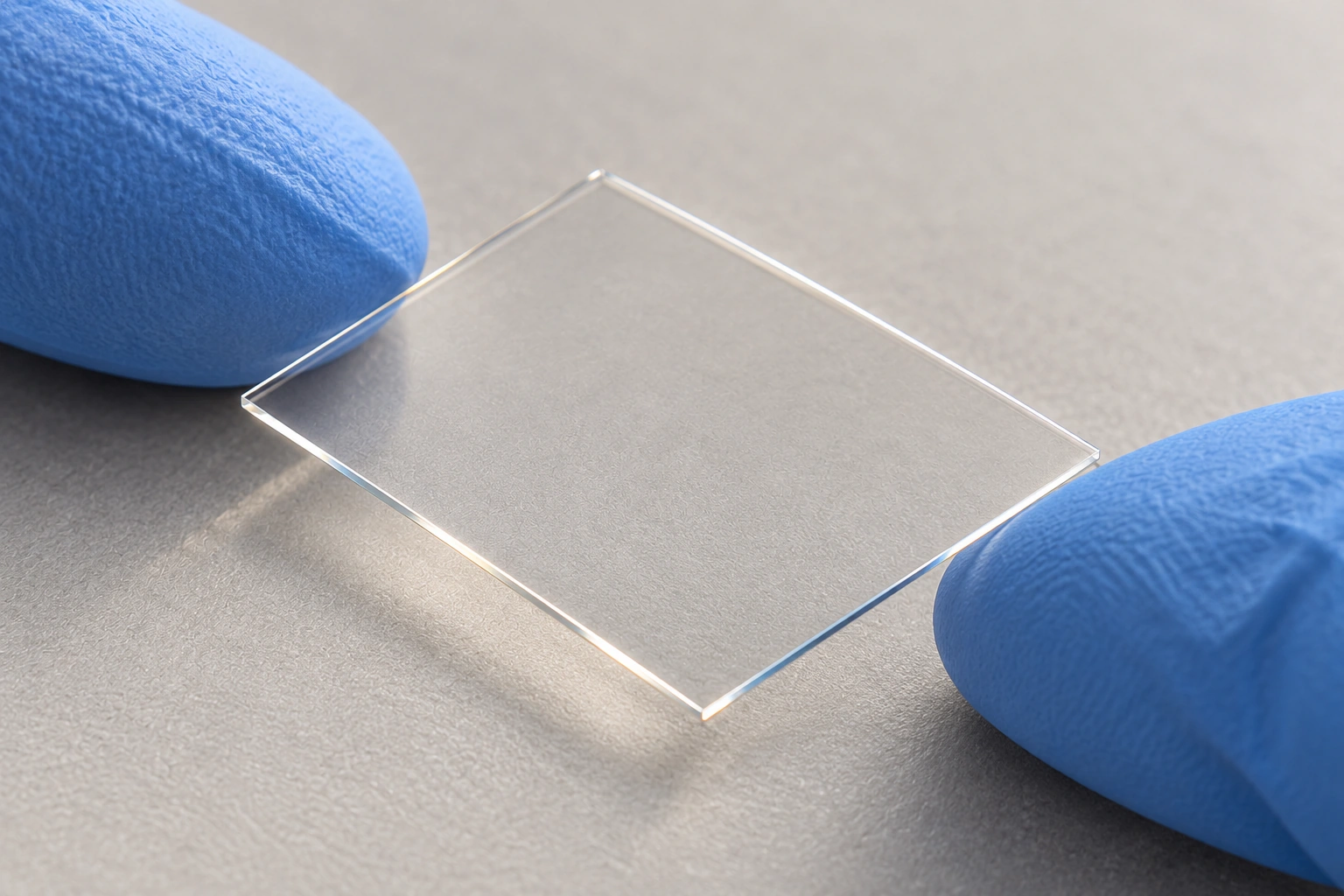
A thin part can be awkward to place or retrieve in a flush pocket. Show the insertion route and the space available to the intended handling tool, without assuming that gripping a functional face is acceptable.
Specify the allowed contact regions and the required delivered condition. The dimensions alone do not establish a handling method or a breakage limit.
State the optical requirement rather than relying on the grade name
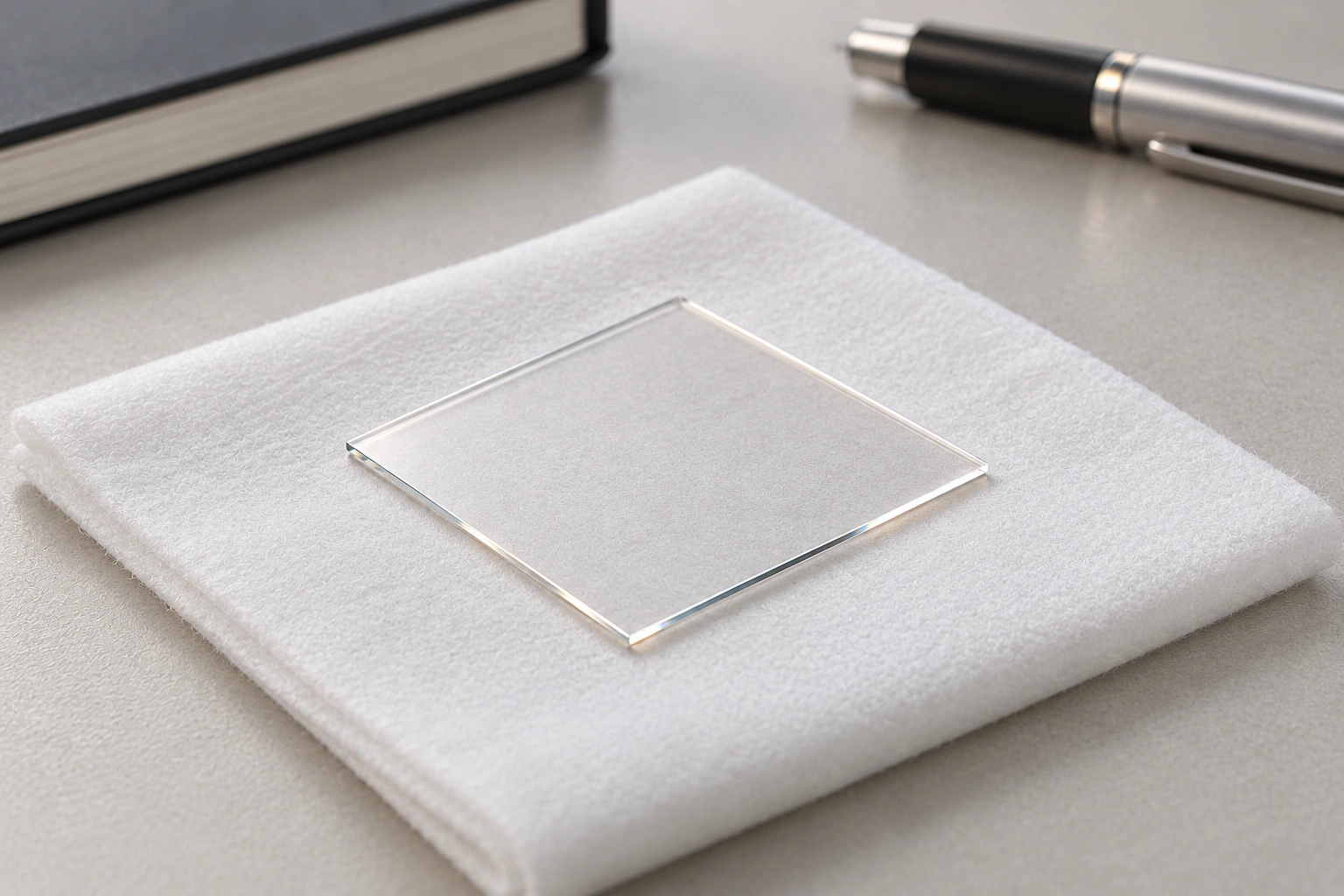
JGS1 is the listed material designation. If the method needs a particular transmission, surface quality, flatness or other optical criterion, put that requirement and its measurement conditions in the enquiry.
A clear reference rendering cannot prove those values. Any inspection record should correspond to the ordered requirement and the actual supplied plate.
Changing thickness calls for a holder review
For example, a customer may need to preserve a 10 × 10 mm footprint while reviewing a thinner window. The seating depth, retention and clear aperture should be considered with that change.
MQ can review the proposed plate and support arrangement. Any bonding, sealing, pressure or thermal requirement needs a defined assembly and acceptance scope; none follows from the nominal plate thickness.
Structure reference and specification points
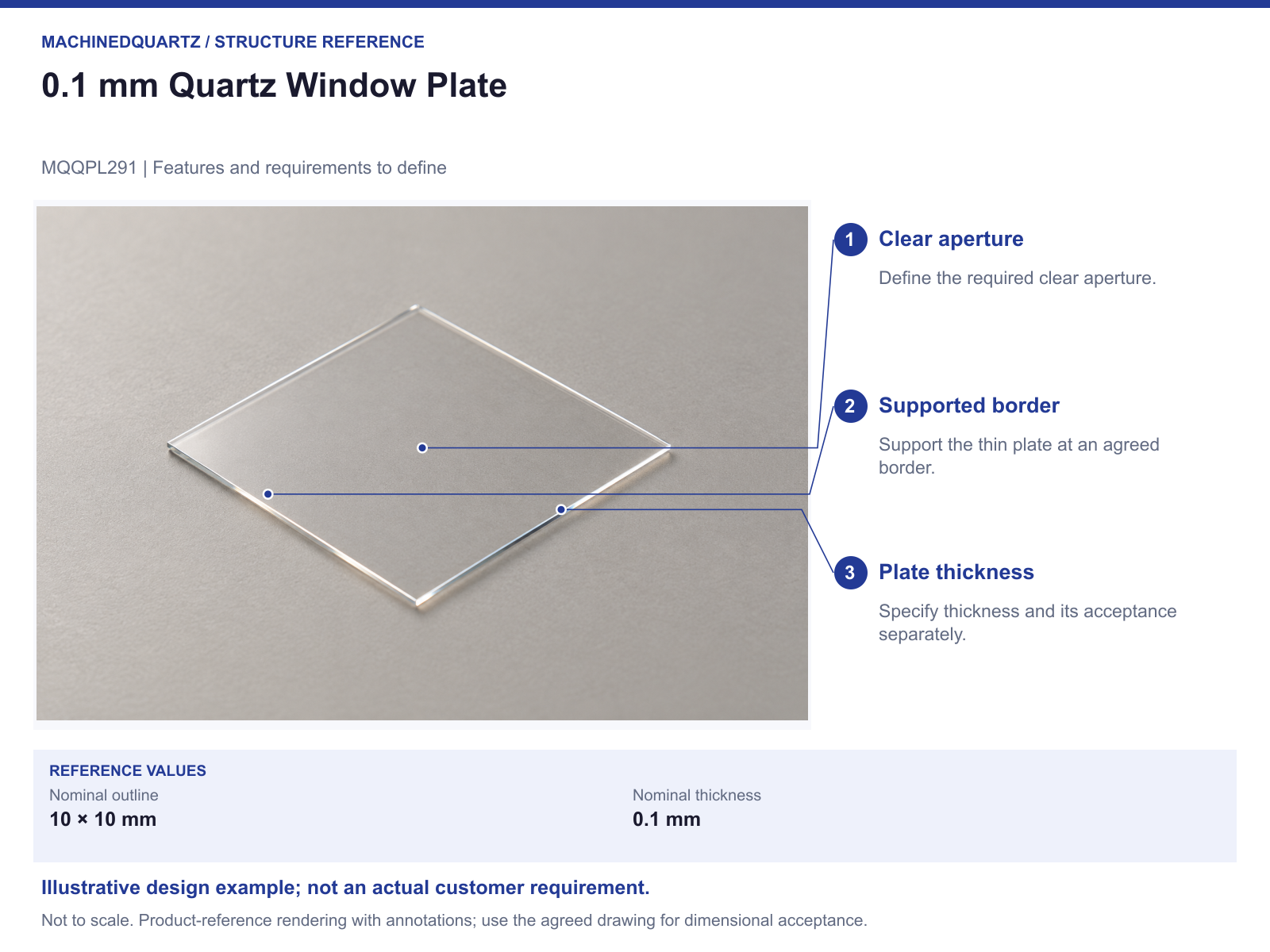
Download the structure reference (PDF)
Does 0.1 mm describe a short optical path through a liquid?
It describes the solid plate thickness in this option. A liquid path would need a separate sample-space dimension and assembly definition.
Send a drawing or the mating-part details
Send the window seat in section with the clear aperture marked. MQ can then review the thin plate together with the surfaces that support it.
- Plate outline and thickness tolerance
- Clear aperture and supported border
- Seat, retention and insertion section
- Optical criteria with measurement conditions
- Contact restrictions, delivered condition and quantity
Modified designs are reviewed for the project. The drawing, supplied parts, quantity, inspection scope, price and preparation or production time are agreed in the quotation.
Details to settle for the ordered configuration
Optical performance, geometric tolerances, retention, sealing and load limits require an agreed specification.



Recent Comments