
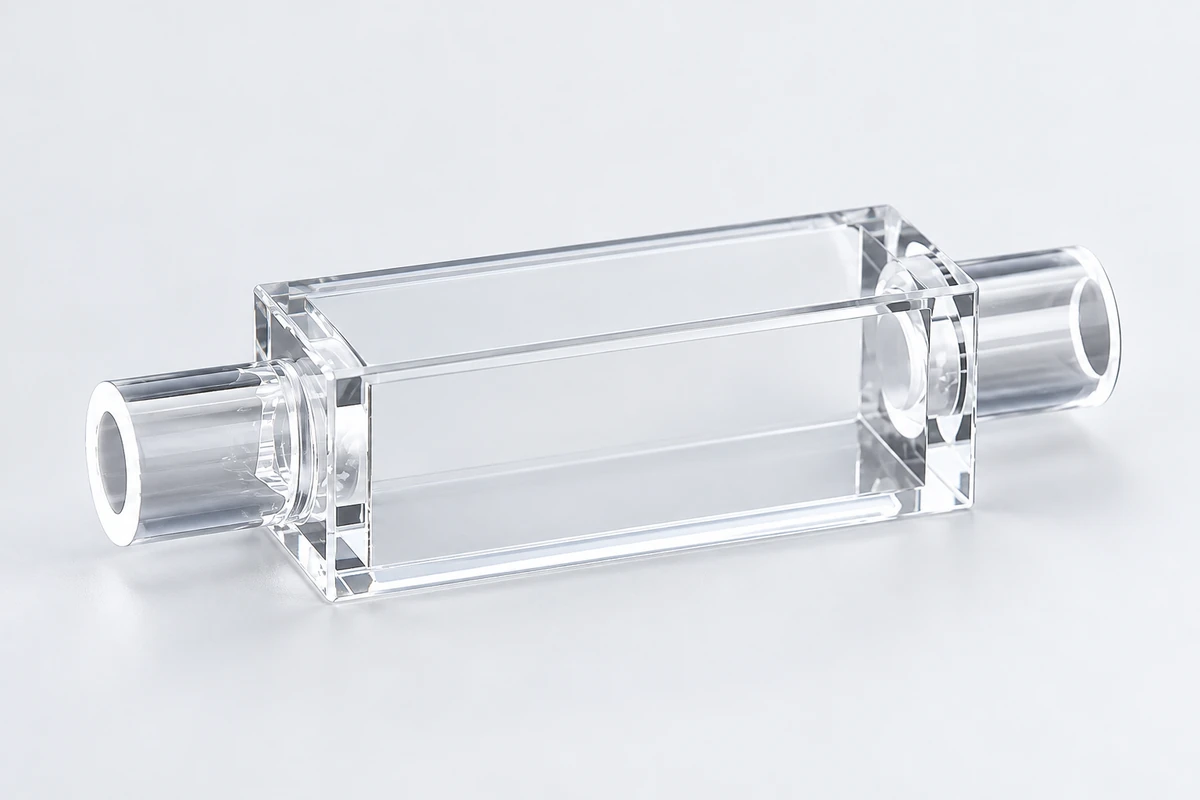
Large-Port Quartz Flow Cell: Planning the Tubing Route (MQQFC103)
Two quartz end tubes, OD8 mm and ID5 mm, flank a 2.6 mL nominal chamber. This layout brings the tube-to-hose connection and the optical holder into the same selection decision.
Two quartz end tubes, OD8 mm and ID5 mm, flank a 2.6 mL nominal chamber. This layout brings the tube-to-hose connection and the optical holder into the same selection decision.
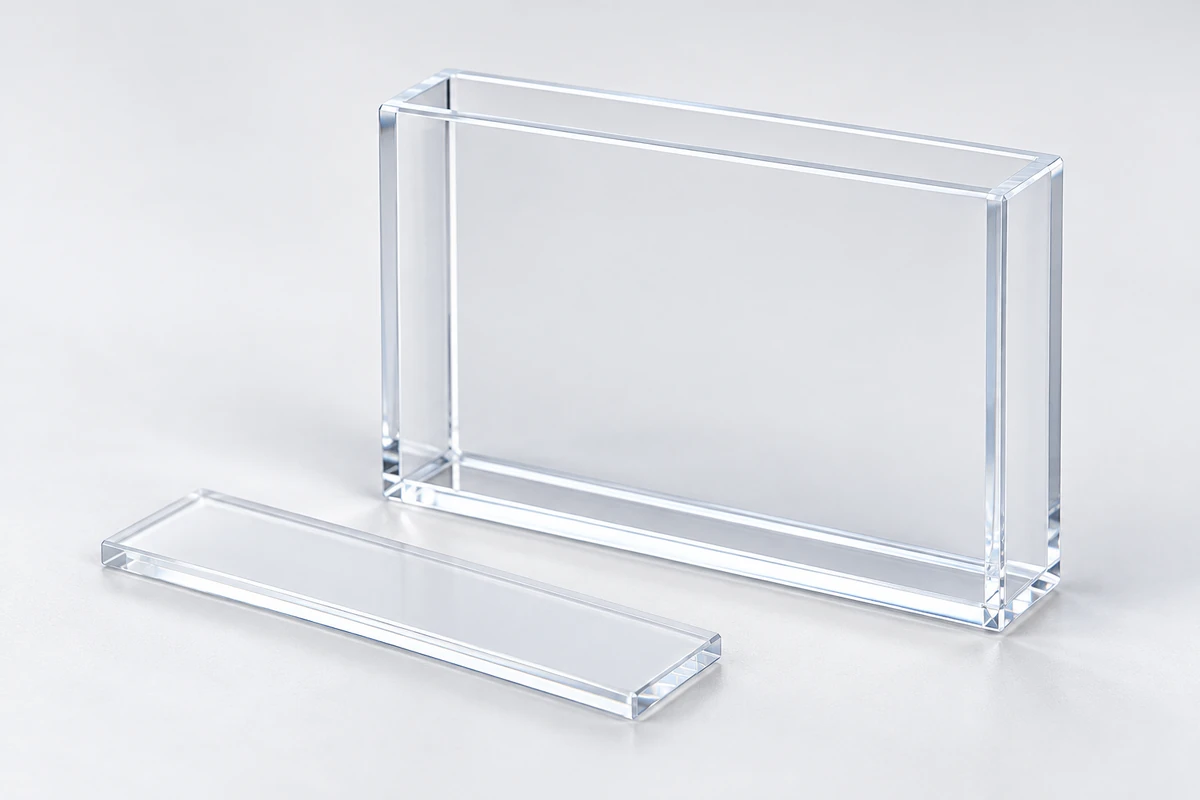
A broad chamber provides nominal 50 mm and 10 mm sample directions. Choose the optical direction first, then allow for the wider holder footprint and the liquid level needed by the method.
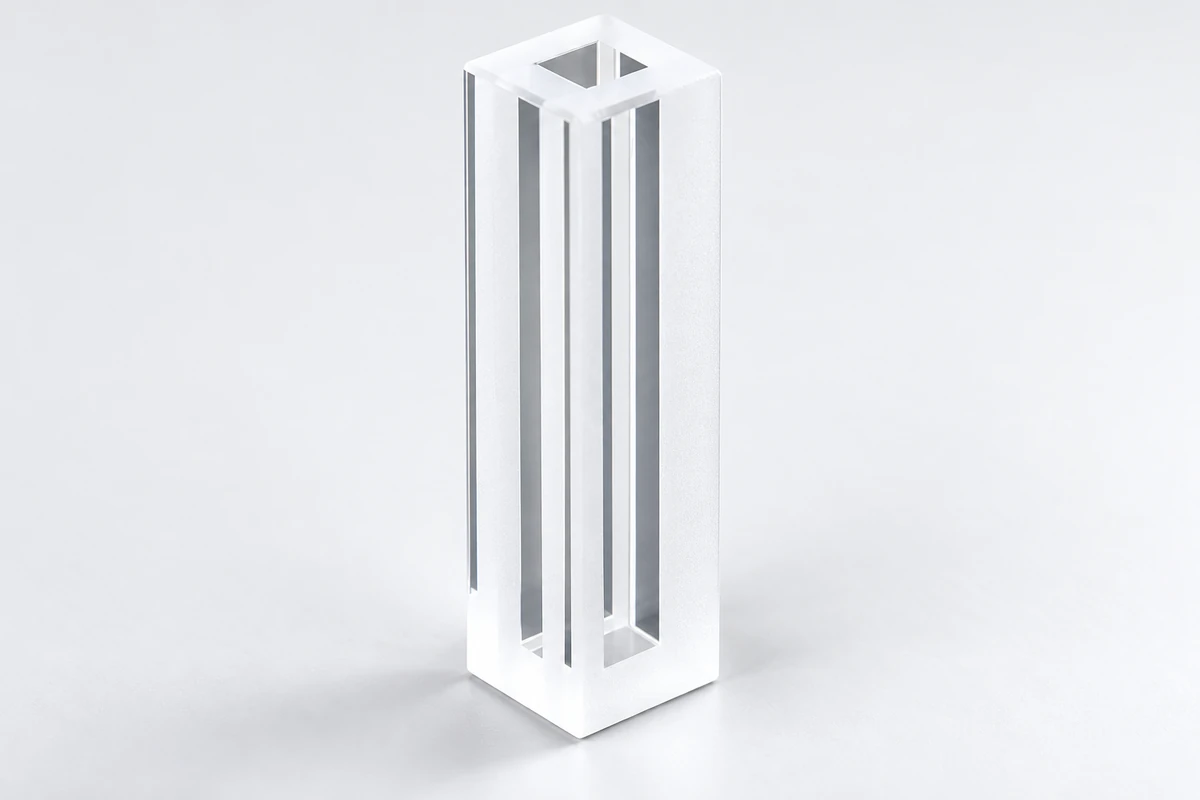
A 4 × 4 mm sample region sits inside a 12.5 mm-square body. This microcell is selected around both the shorter optical path and the space available for the beam in the filled region.
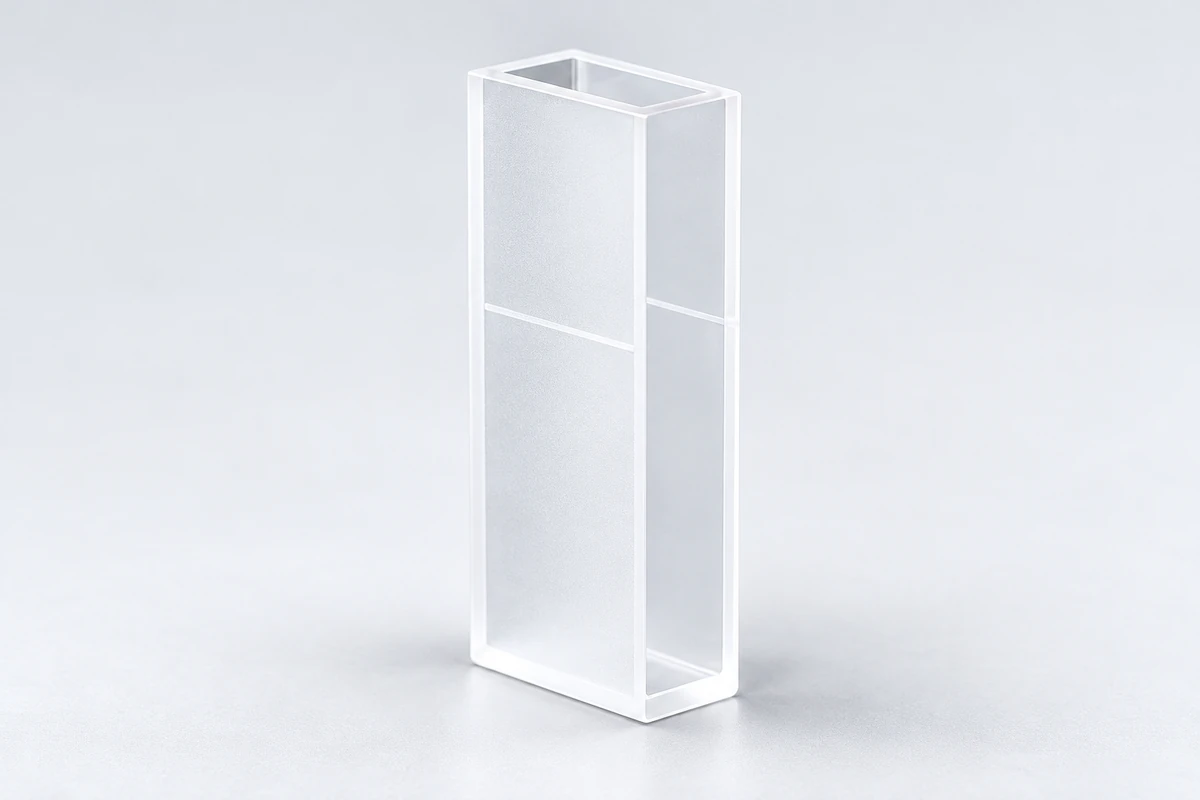
A short, slim 1 mL quartz cell combines an open top with a frosted reference-line face. Its marks can help describe a loading procedure; holder support and beam coverage still need their own dimensions.
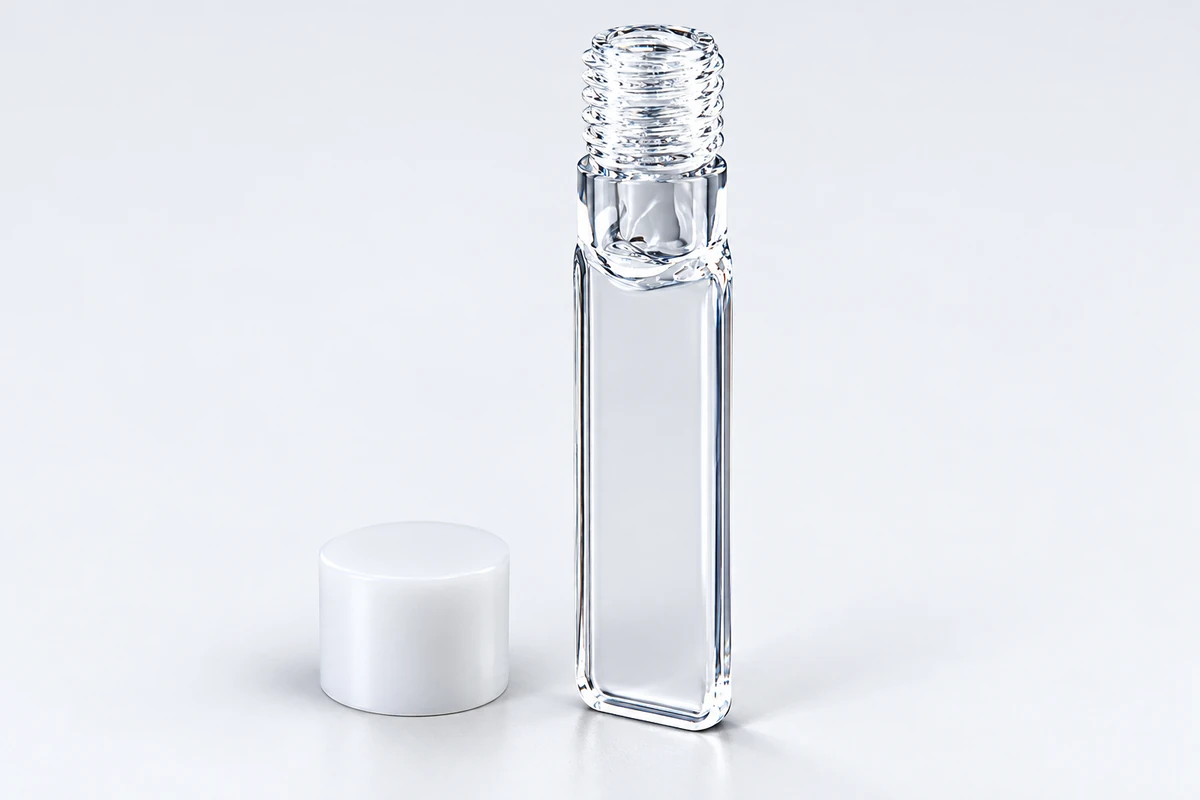
A nominal 0.3 mm sample layer sits below a larger M10 screw opening. The short path, thin optical body and 58 mm capped height each solve a different part of selection.
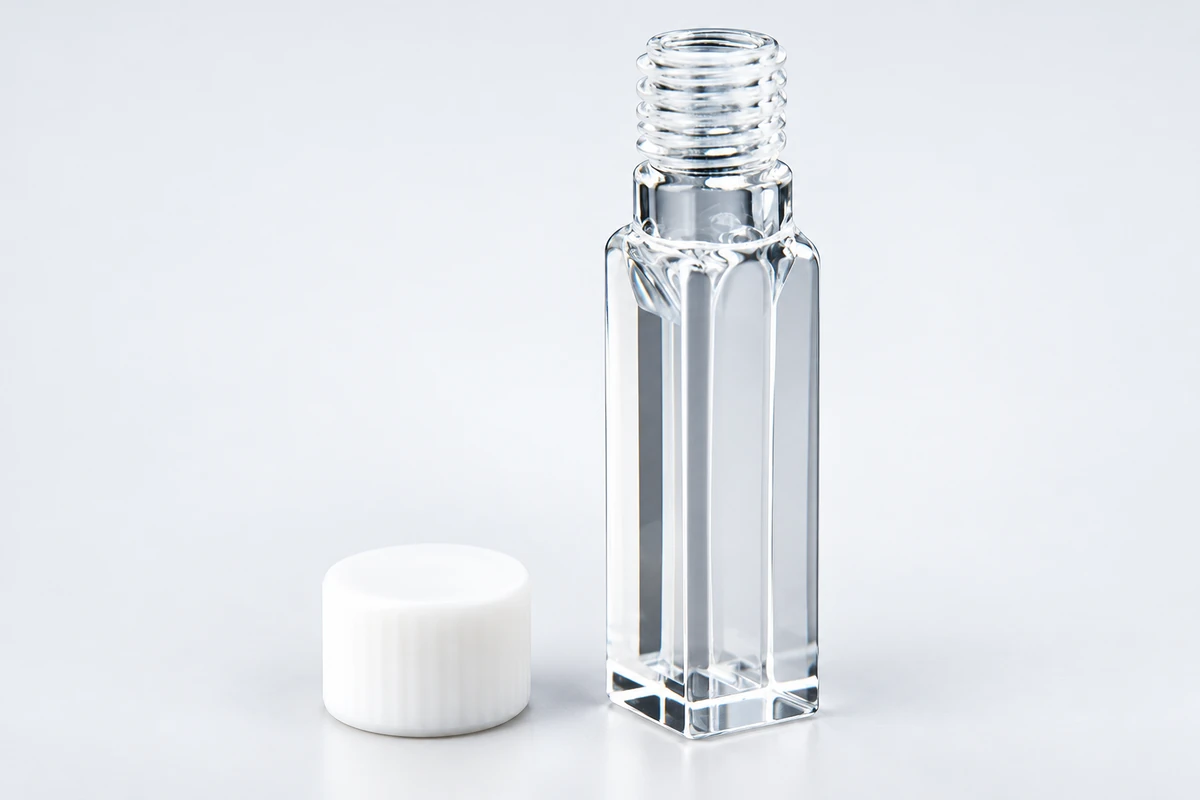
This JGS3 quartz microcell combines a 10 mm path, a narrow 2 mm sample region and an M12 top with a PTFE cap. Start selection with the actual wavelength and closure requirements.
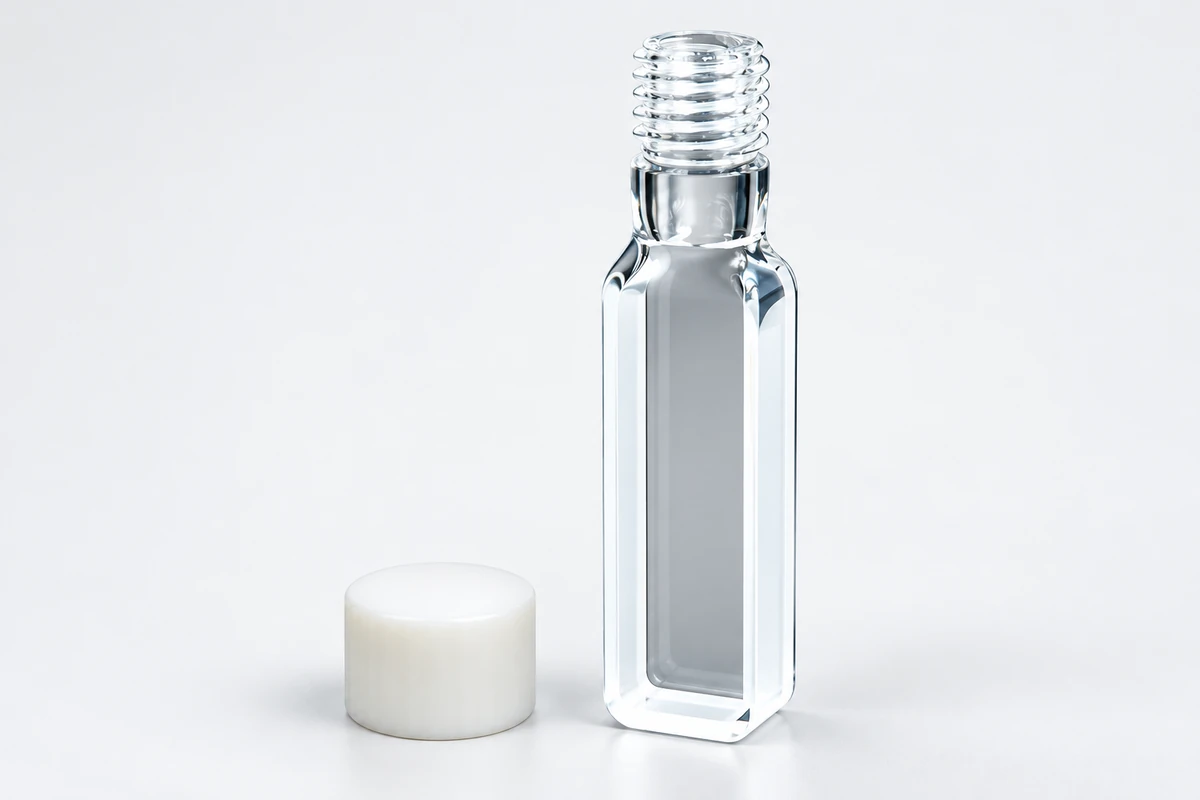
A nominal 5 mm path and a screw-top opening offer a different combination from an open 10 mm cell. The narrow body needs support, while the 58 mm capped height needs overhead clearance.
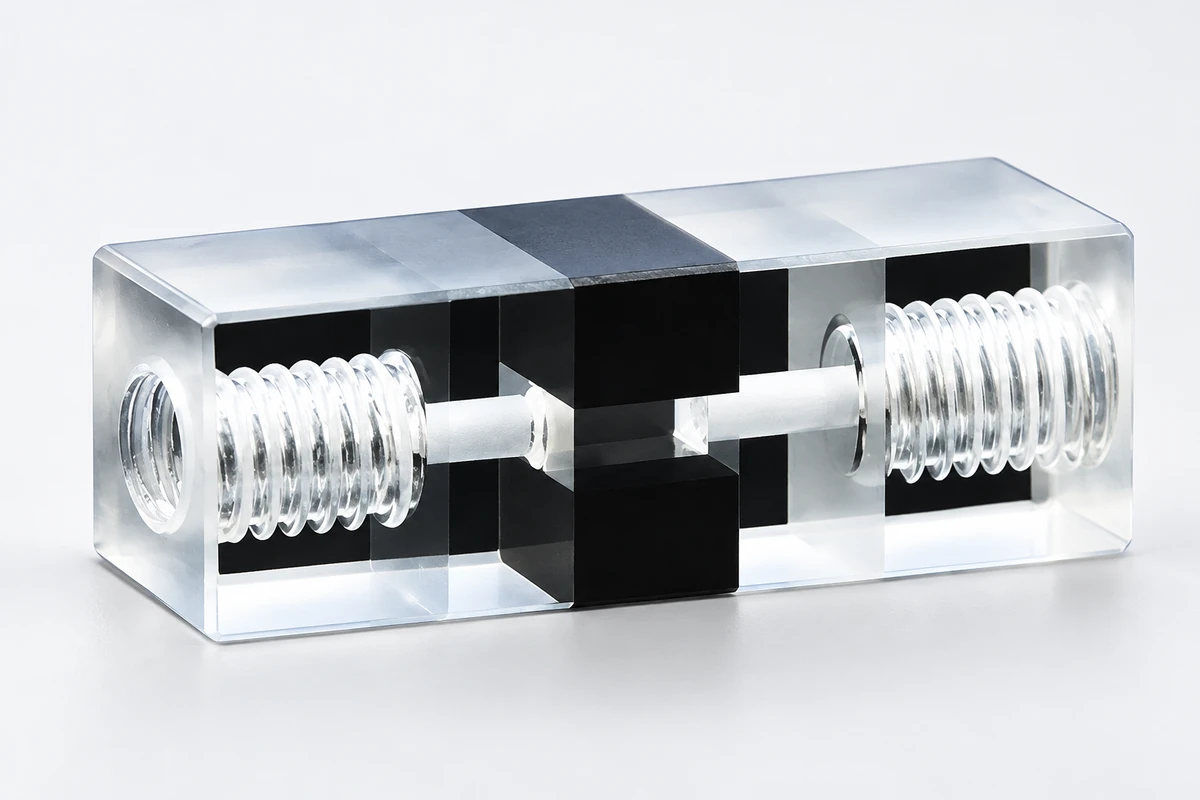
A small masked measurement region sits between two female M6 connections. This compact flow block needs the mating fitting, seal seat and beam position to be reviewed together.
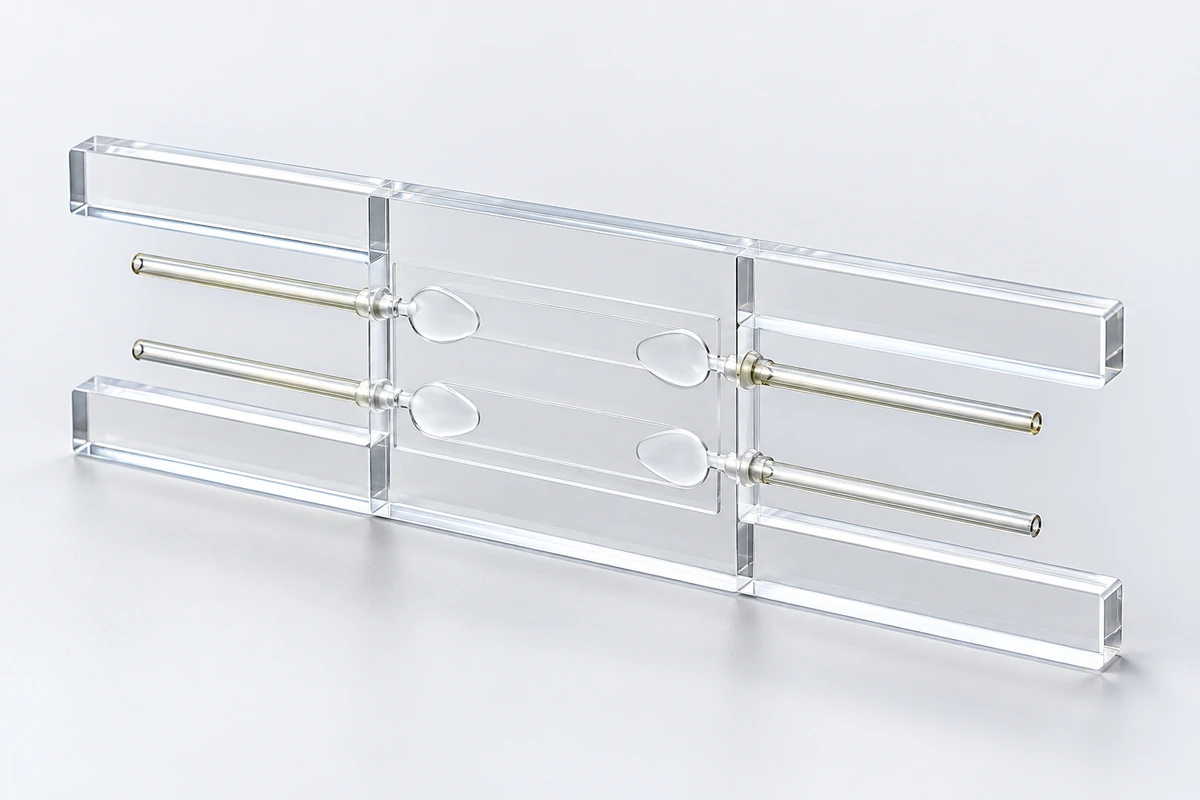
Two shallow fluid routes share one quartz plate and four end tubes. The layout gives two observation regions a common mechanical support, while each route still needs its own connection and optical plan.
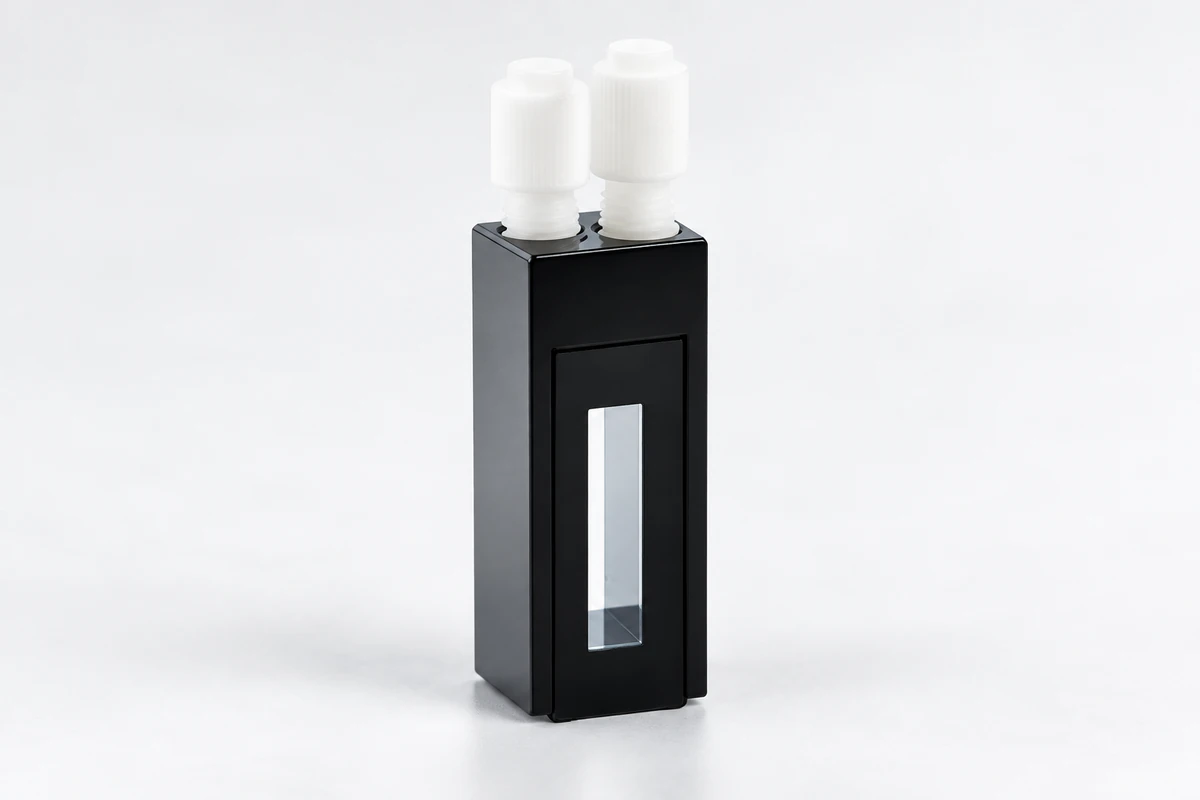
A tall rectangular optical window and two top connections define this 600 µL nominal flow-cell configuration. Selection starts with fitting the beam through the window and leaving room for the tubing above.


Recent Comments