
Circular Quartz Cell with Side Tubes: Defining the Filling and Viewing Routes
Custom Design Guides · MQQFC120
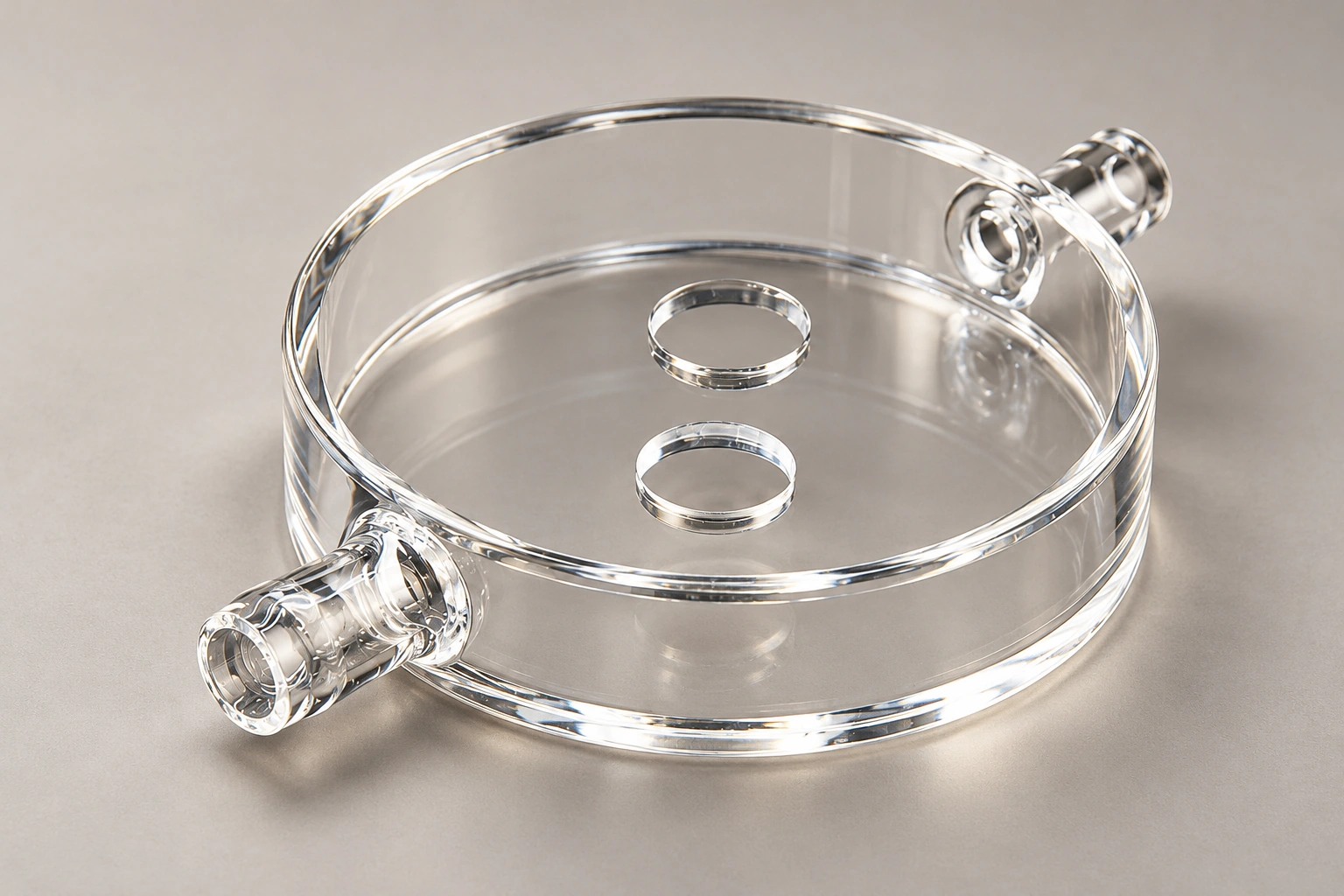
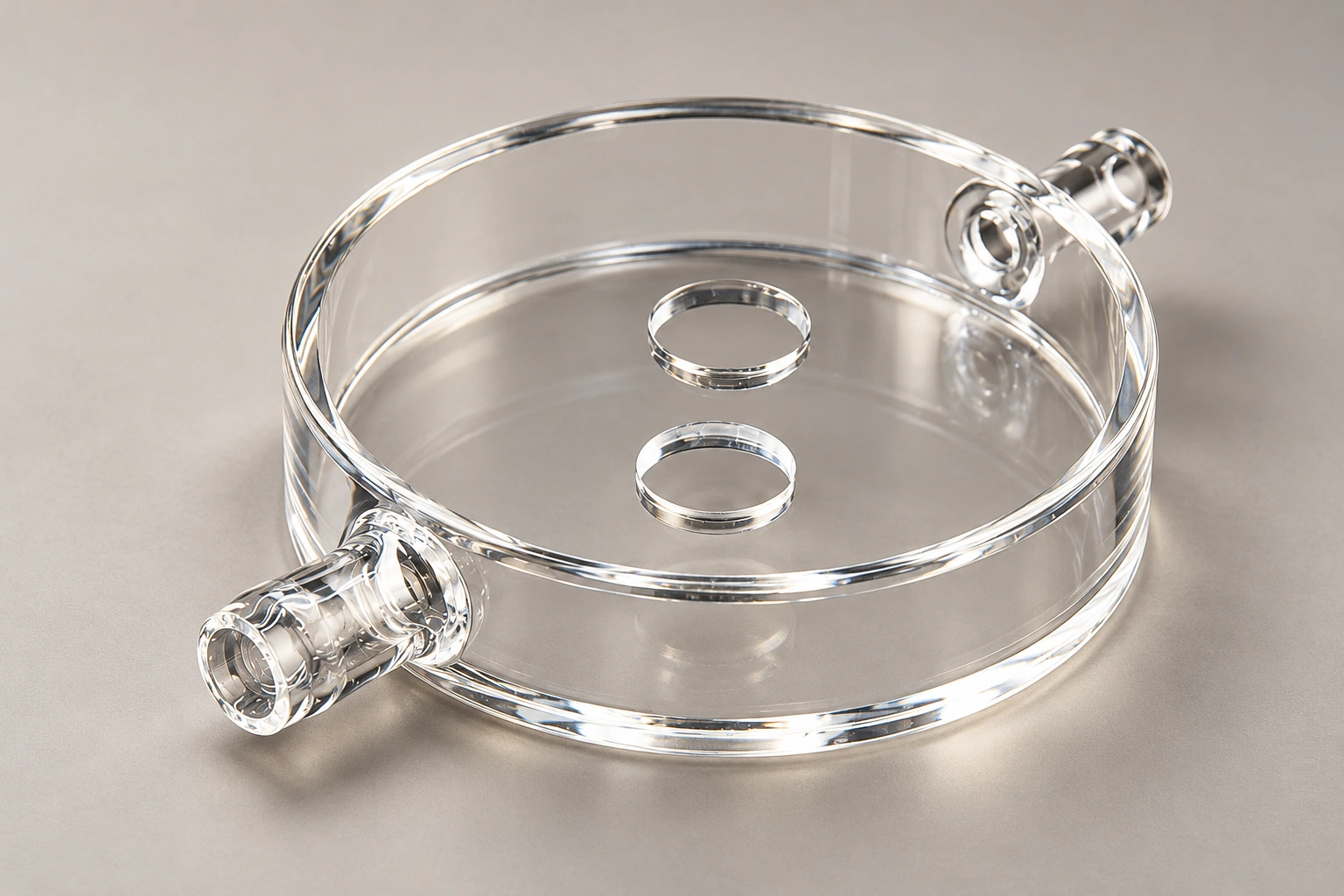
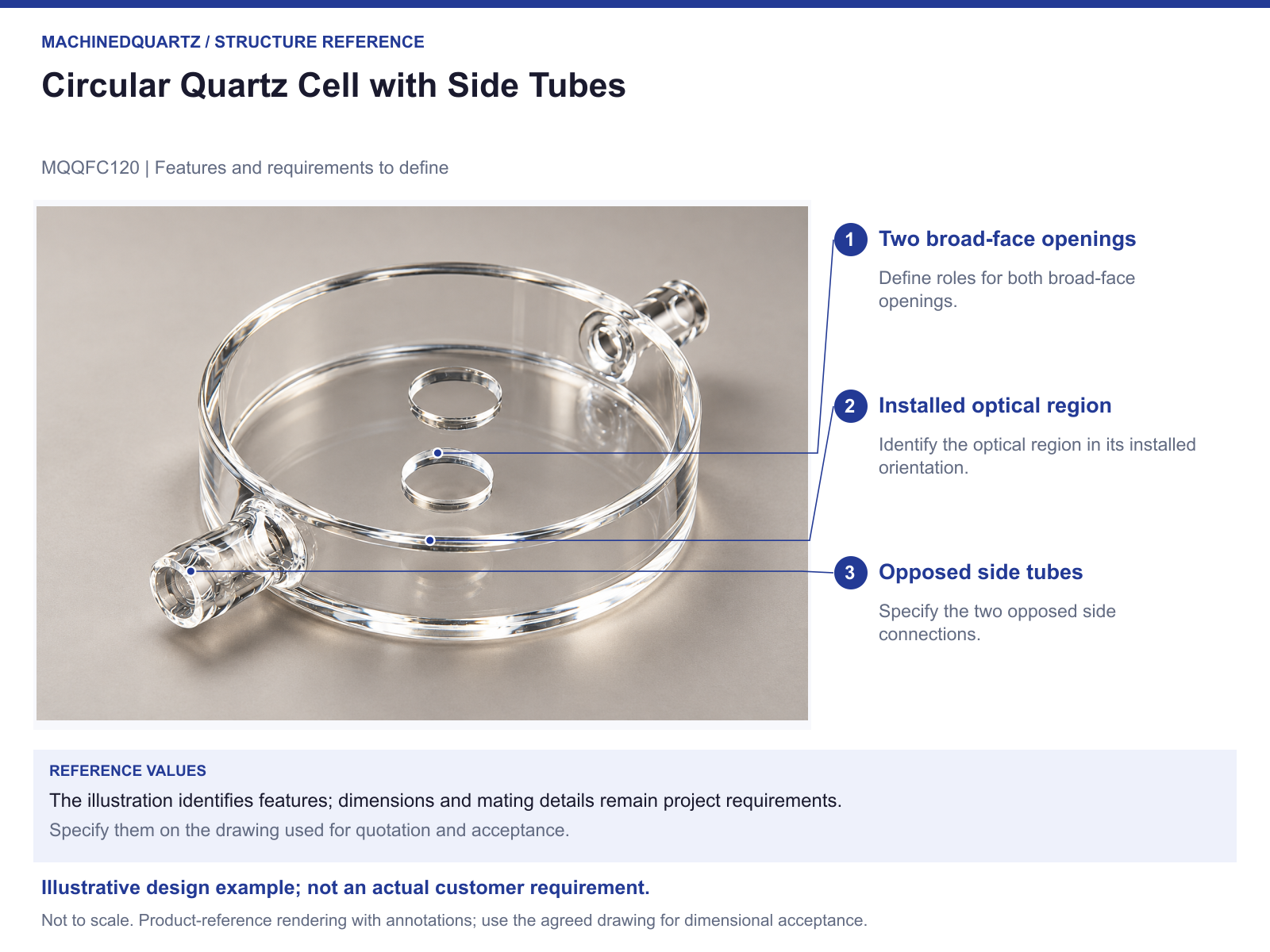
MQQFC120 is a circular quartz-cell reference with two opposed side tubes and two visible openings in a broad face. It should not be represented as an uninterrupted, sealed circular window.
The useful first step is to identify every opening and its proposed role. The circular outline alone does not establish a chamber route, a closed front face or compatibility with a particular optical instrument.
In this guide: Configuration · Design comparison · Map all openings before the circuit · Define the optical region around the interruptions · Keep support away from connection loads · Review the containment boundary as an assembly · Enquiry
The configuration discussed here
What changes from the simpler form?
Face openings add access features beyond the opposed side connections of a circular body. A simplified sealed-disc model would omit those interfaces, so both the optical region and containment boundary need an opening map.
Map all openings before the circuit
Use separate identifiers for the side tubes and broad-face openings. Show whether each proposed interface is to be connected, closed or used for another stated task.
A flow diagram needs the internal route as well as the external lines. The product view does not establish how the face openings communicate with the sample space.
Define the optical region around the interruptions
Mark where the method needs a clear view and the orientation of the circular body. Include the broad-face openings in that view rather than allowing a simplified disc drawing to hide them.
If a specific path, clear aperture or window criterion is needed, identify its endpoints and acceptance conditions. The reference shape is not an optical test report.
Keep support away from connection loads
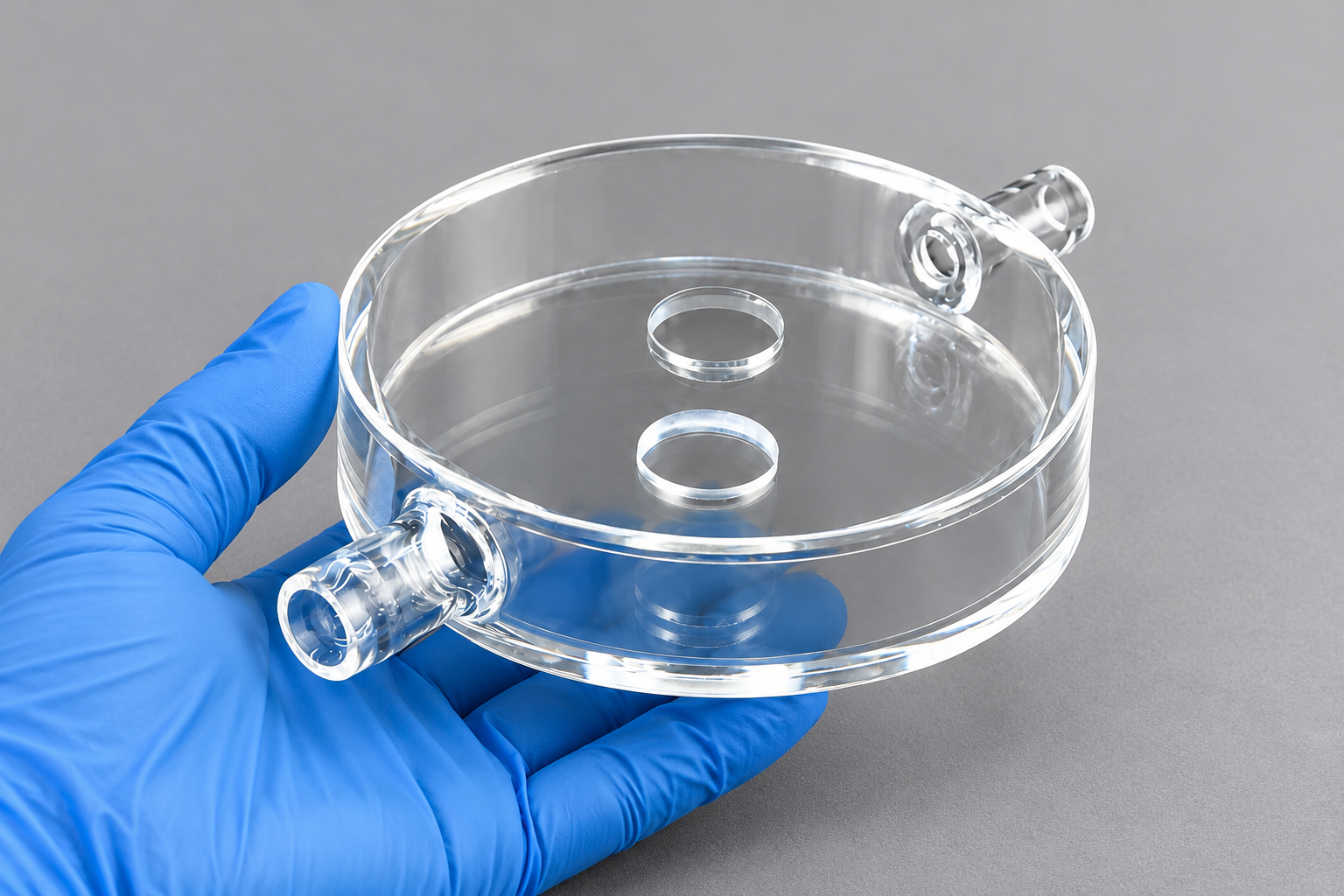
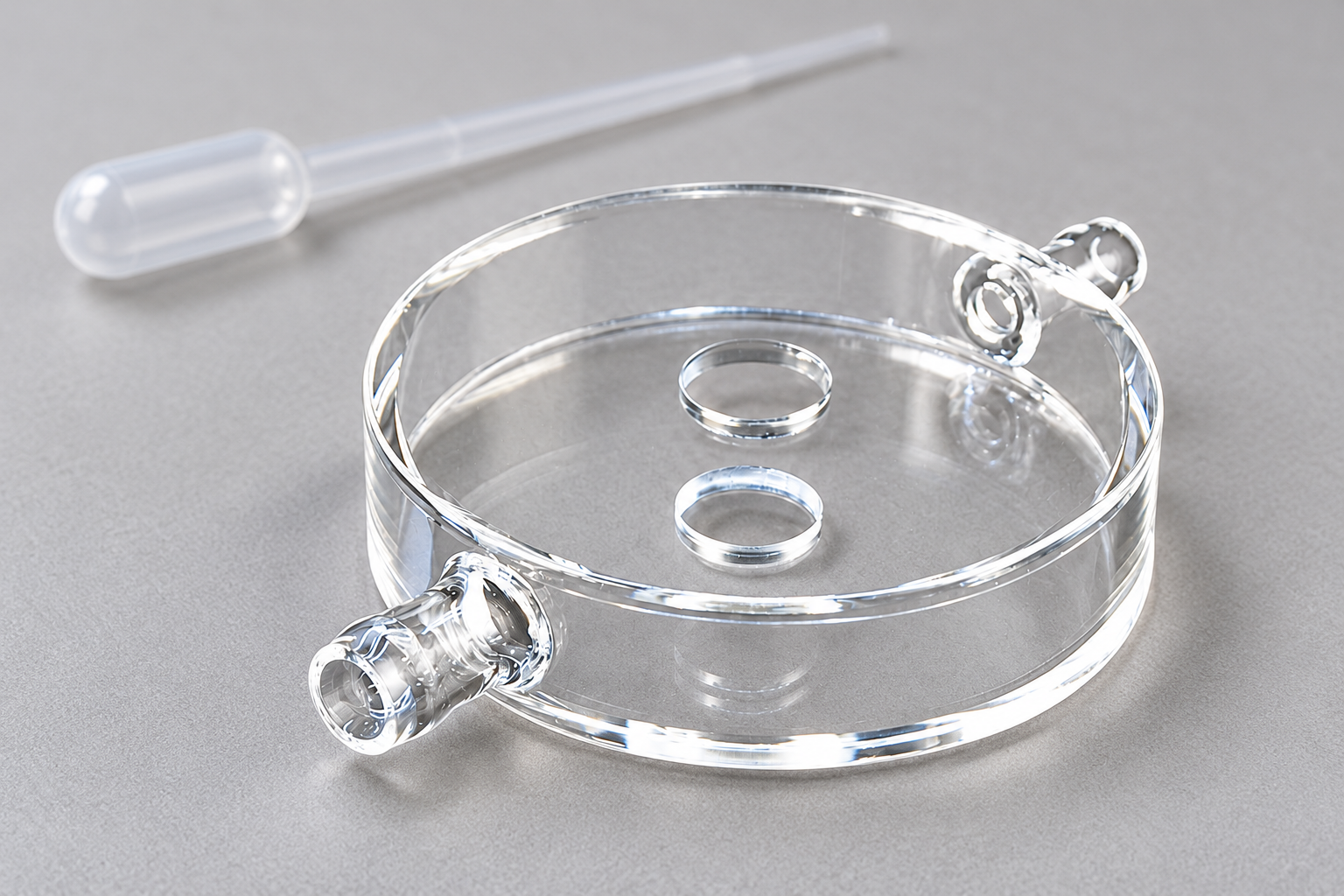
Show where the body is located and supported, together with the line attachment and removal space. Projecting tubes should not become an unspecified fixture support.
For example, rotating a circular body in a proposed holder may alter both the line approach and the face-opening access. That orientation needs to be shown explicitly in the installation sketch.
Review the containment boundary as an assembly
List any closures, connectors and seals needed to complete the proposed arrangement. Their presence and performance cannot be assumed from an image of the quartz body.
MQ can review the complete opening map with the sample conditions and inspection request. A leakage, pressure or flow result requires an agreed assembly and verification method.
Structure reference and specification points
Download the structure reference (PDF)
Is the broad face a complete sealed optical window?
The reference shows two openings in a broad face. Their roles and any closures must be defined before describing a sealed chamber or selecting the usable optical region.
Send a drawing or the mating-part details
Send an annotated front view and side section. MQ can then review the circular cell without overlooking the face openings.
- Identifiers and proposed roles for every opening
- Internal route and external circuit
- Installed orientation and clear optical area
- Body support and connection service space
- Closures, sample conditions and acceptance checks
Modified designs are reviewed for the project. The drawing, supplied parts, quantity, inspection scope, price and preparation or production time are agreed in the quotation.
Details to settle for the ordered configuration
Internal communication, supplied closures, containment limits and optical or instrument compatibility require confirmation.


Recent Comments