
Nested Quartz Cell: Defining the Inner Chamber and Removable Parts
Custom Design Guides · MQQFC135
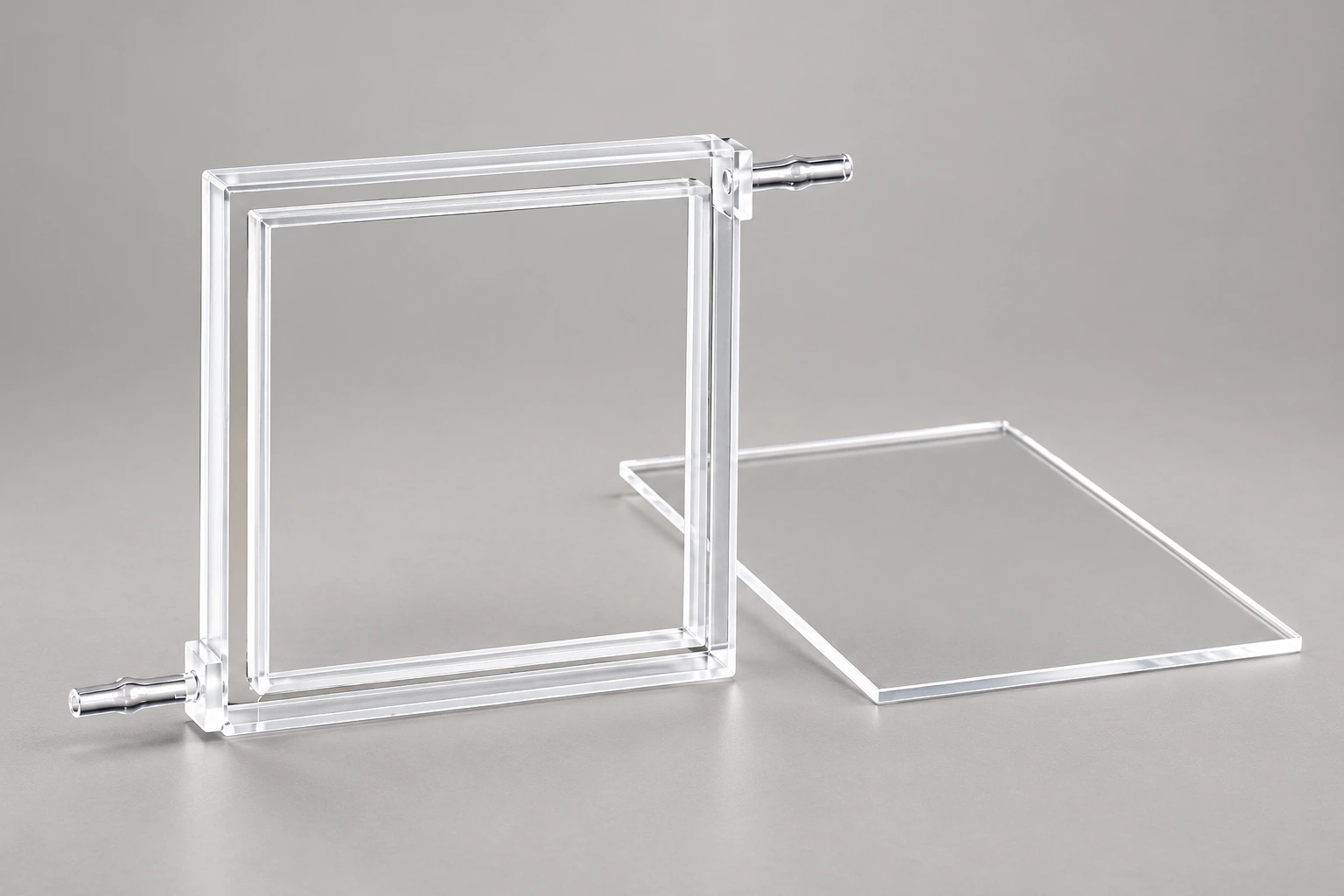
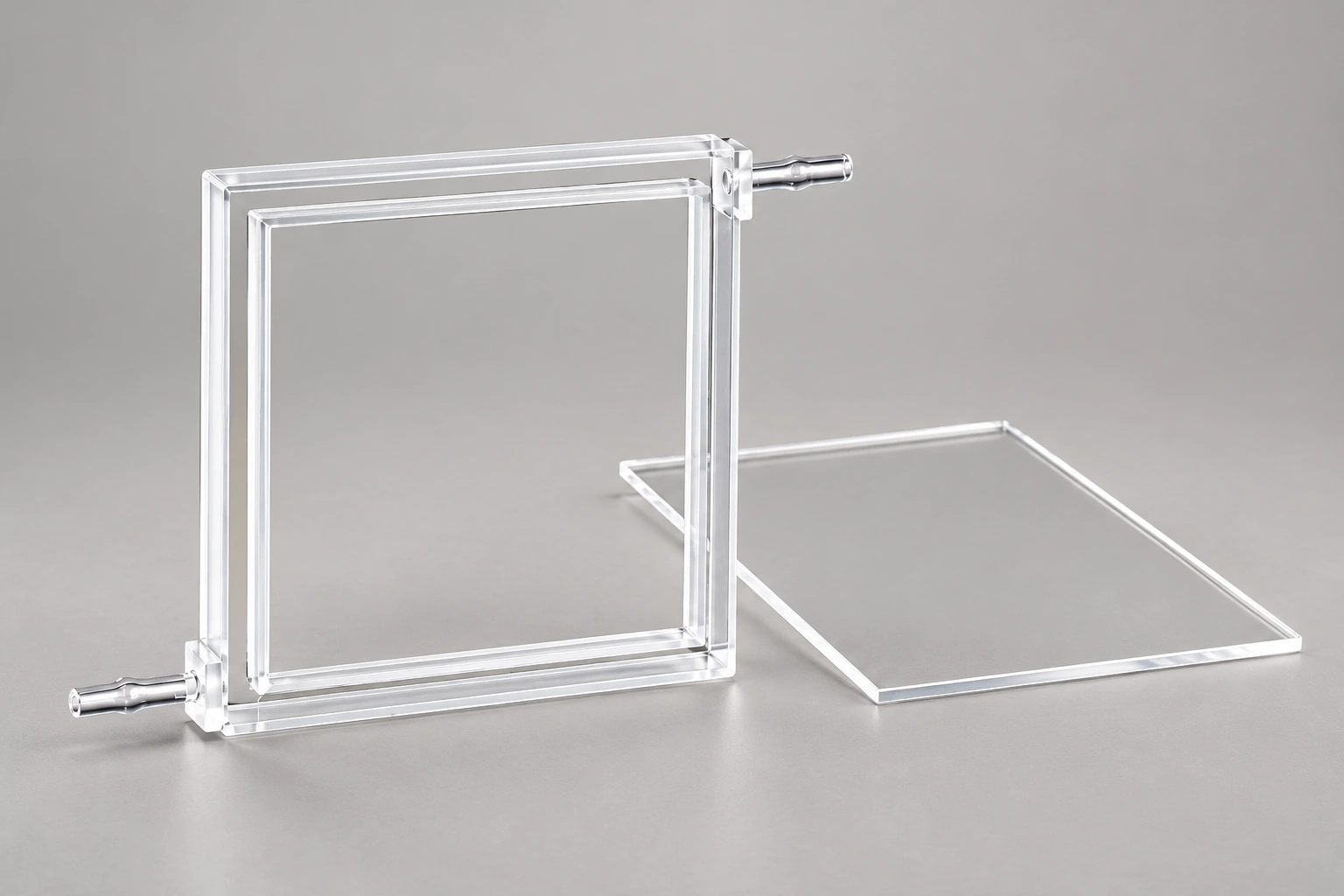
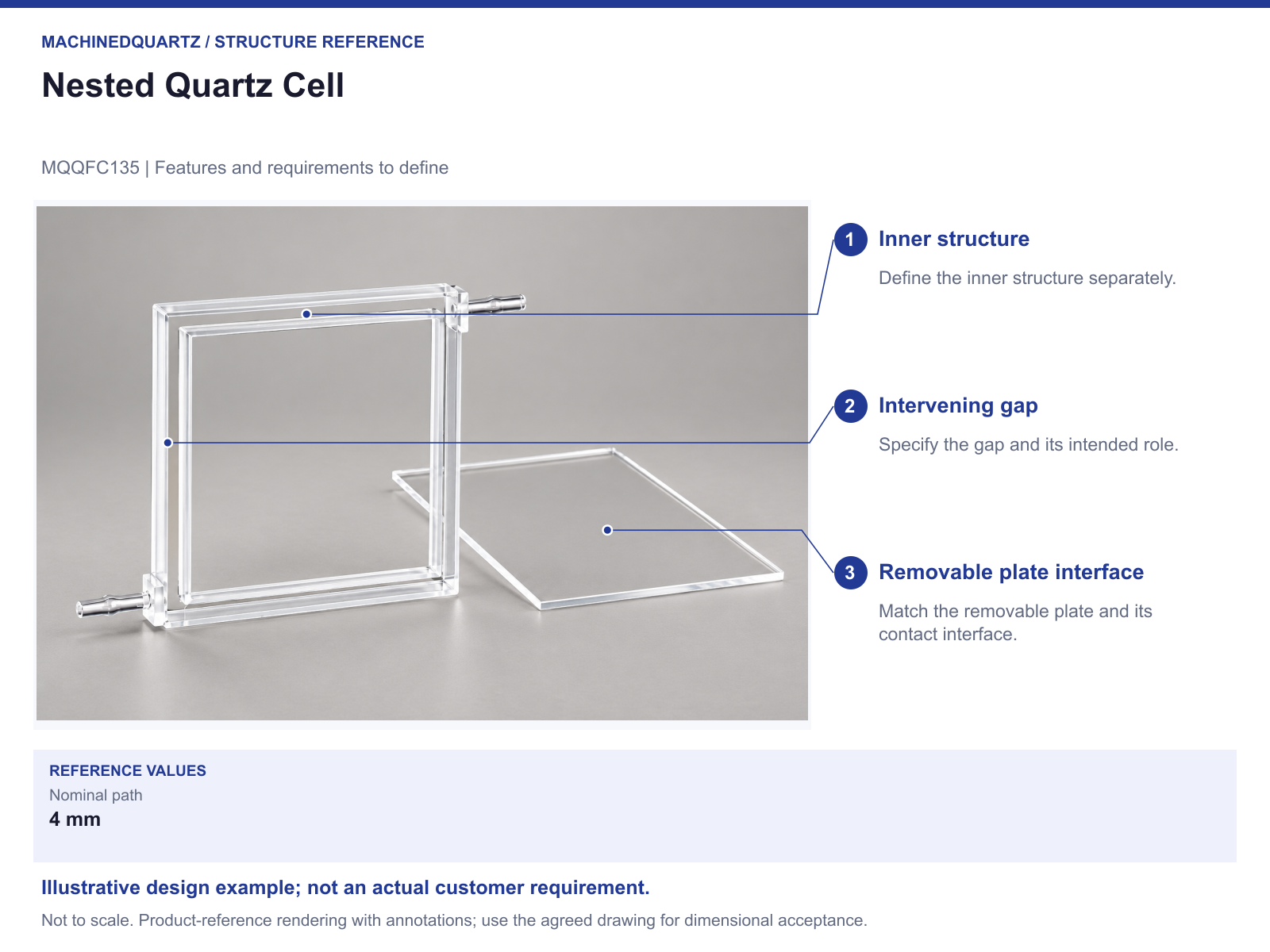
MQQFC135 is the nominal 4 mm path reference with nested quartz structures and a separate removable plate. The visible gap between the structures makes the part arrangement central to the discussion.
That gap should not automatically be called a temperature-control jacket. Its connections, containment boundary and proposed task need their own definition.
In this guide: Configuration · Design comparison · Name the parts before describing their operation · Define what belongs in the gap · Show the plate's insertion and contact references · Review the optical path through the full arrangement · Enquiry
The configuration discussed here
What changes from the simpler form?
The nested form introduces an intervening space and a removable plate around the inner structure. Those additions create new contact and boundary questions without establishing a jacket or a dismantlable body.
Name the parts before describing their operation
Identify the inner structure, outer structure and removable plate on a labelled view. List the components to be supplied and the surfaces at which they meet.
A separate plate does not mean that the entire quartz body can be dismantled. Keep removable components distinct from permanent body features in the enquiry.
Define what belongs in the gap
If the proposed method uses the intervening space, show the intended contents, boundaries and any connections. The visible space alone does not establish circulation or isolation from the sample.
For a temperature-related request, specify the actual sample requirement and proposed verification. A jacket-like appearance is not evidence of controlled temperature or an independent fluid circuit.
Show the plate's insertion and contact references
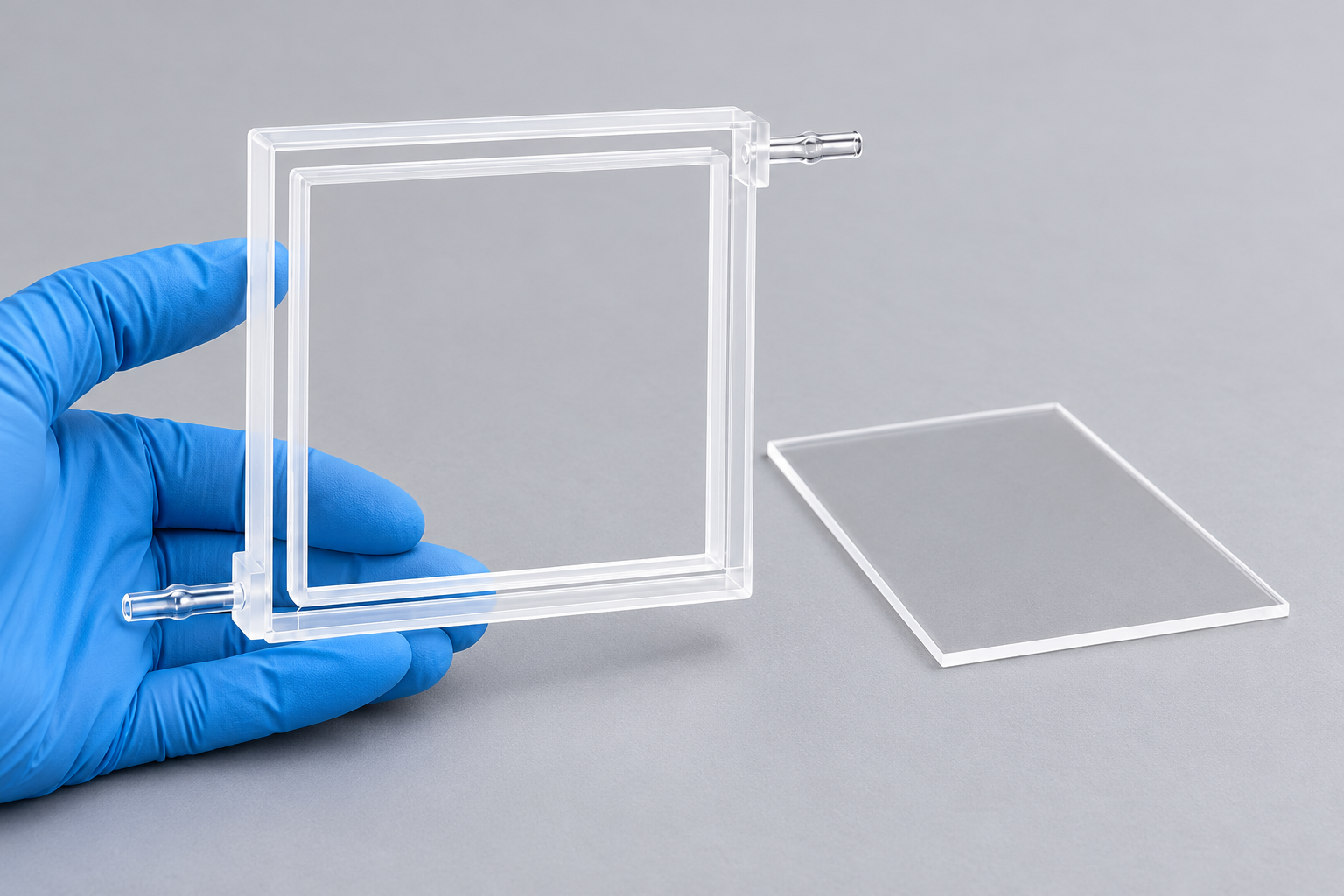
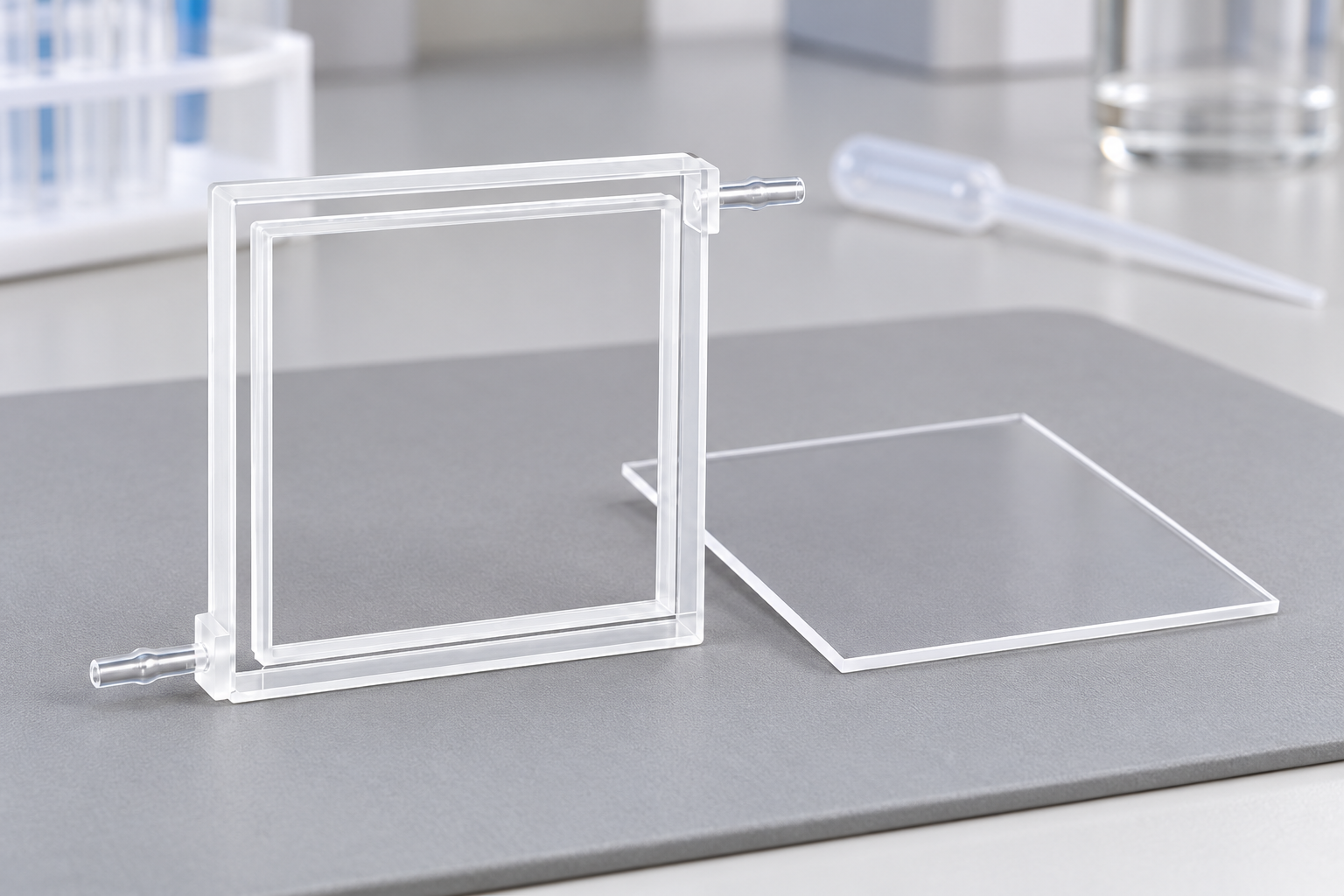
Give the plate outline, its locating surfaces and the access needed to remove it. State any seal or retention requirement separately rather than inferring one from a close fit.
For example, a revised plate could be discussed to suit a sample-loading task while retaining the nested-body concept. That proposal needs a section through the contact and clearances.
Review the optical path through the full arrangement
Mark the required light direction and every interface it crosses. The nominal path designation does not describe the optical effect of the whole nested assembly.
MQ can review the part arrangement with dimensional, optical and containment acceptance requirements. Clear component names and a complete section make those checks specific to the proposed design.
Structure reference and specification points
Download the structure reference (PDF)
Is the outer gap a circulating temperature jacket?
That function is not established by appearance. Define its connections, containment and operating requirement before assigning it a circulation or temperature-control role.
Send a drawing or the mating-part details
Send an assembly section with the plate and gap identified. MQ can then review the intended function without assuming a hidden fluid route.
- Labelled inner, outer and removable components
- Gap boundaries, contents and proposed connections
- Plate locating, removal and sealing details
- Optical route through the complete assembly
- Supplied set and acceptance requirements
Modified designs are reviewed for the project. The drawing, supplied parts, quantity, inspection scope, price and preparation or production time are agreed in the quotation.
Details to settle for the ordered configuration
Gap function, component separation, internal routes and thermal, optical or containment performance require agreement.


Recent Comments