
Thin Circular Quartz Cell: Filling a Wide Window through a Narrow Gap
Custom Design Guides · MQQST011
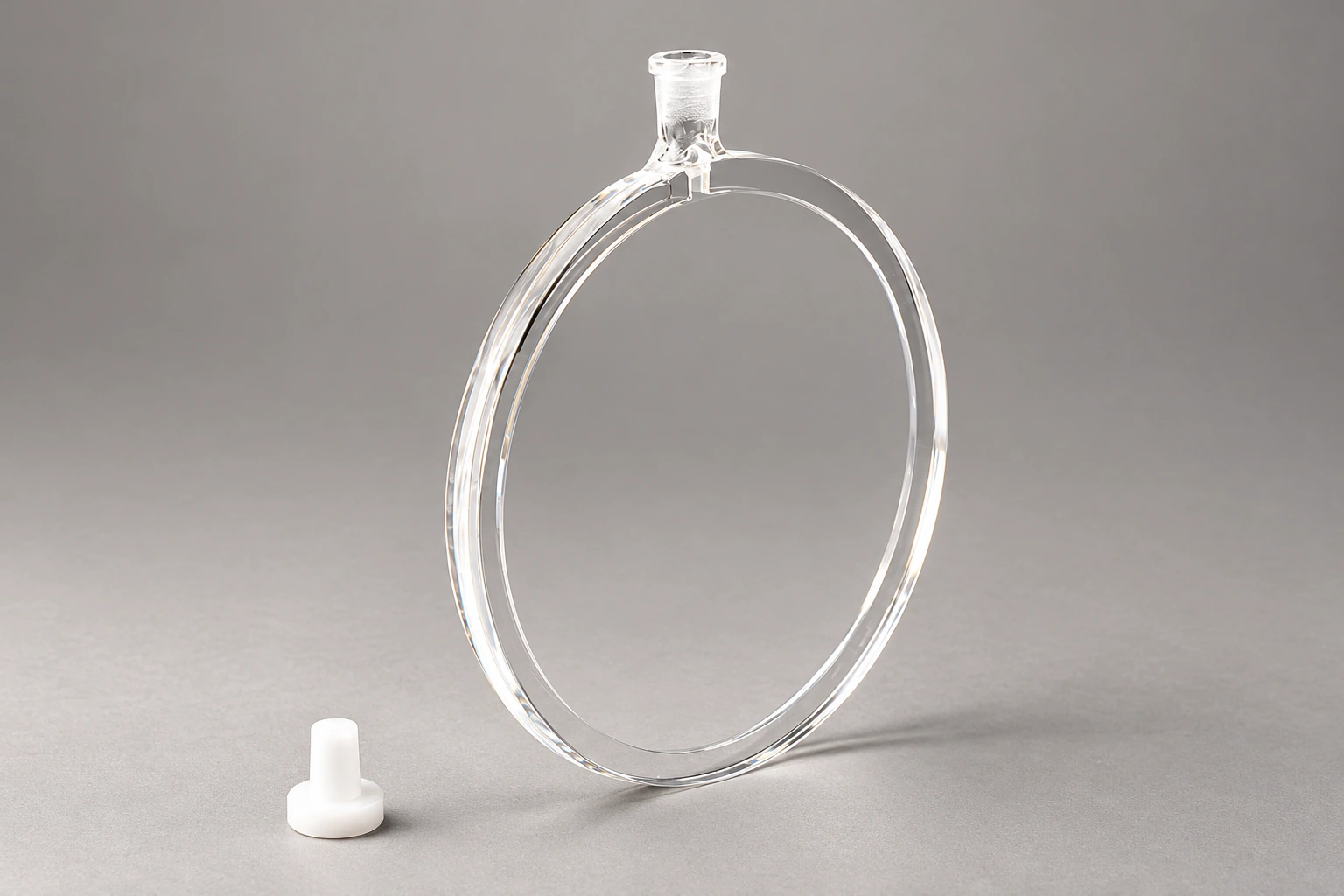
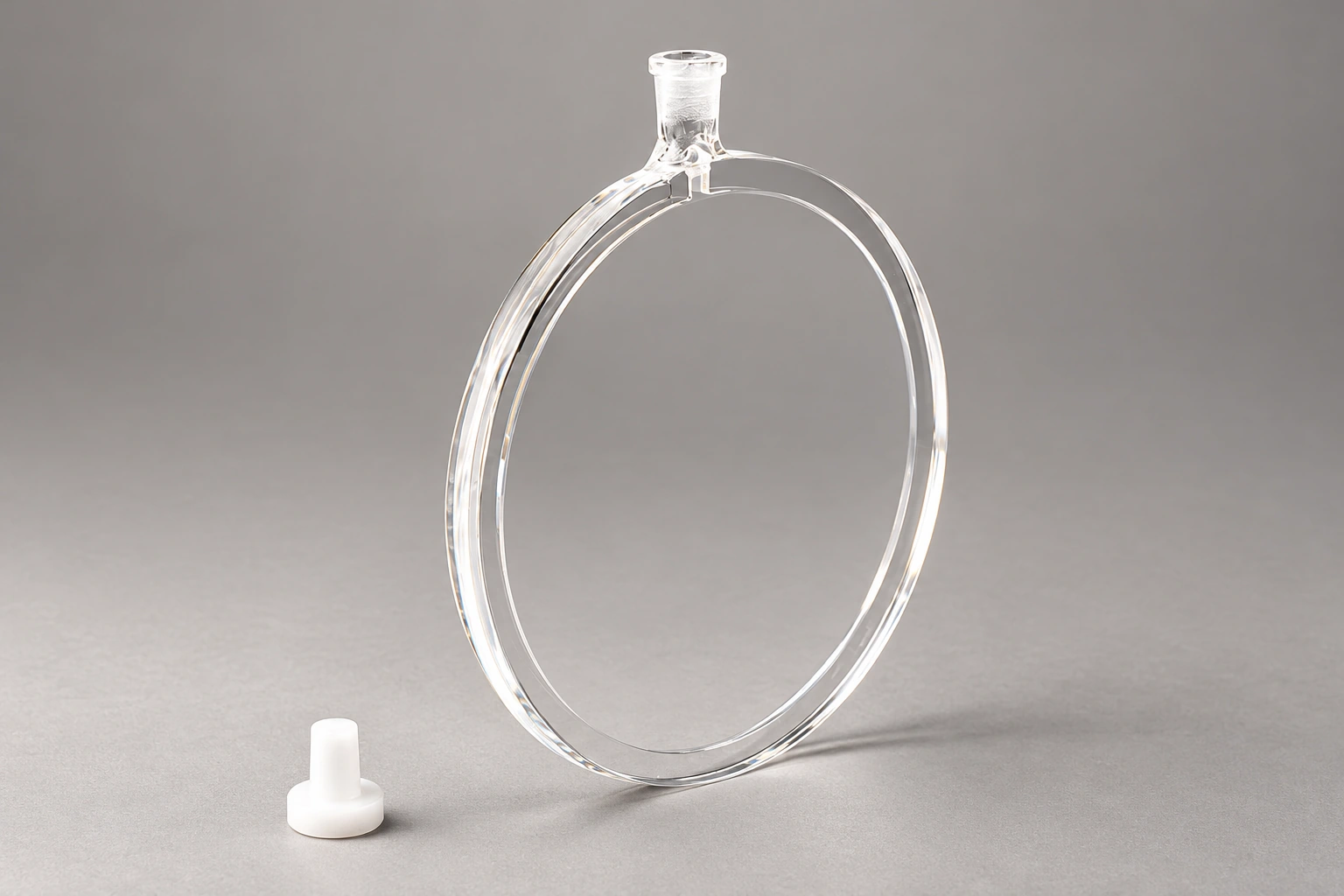
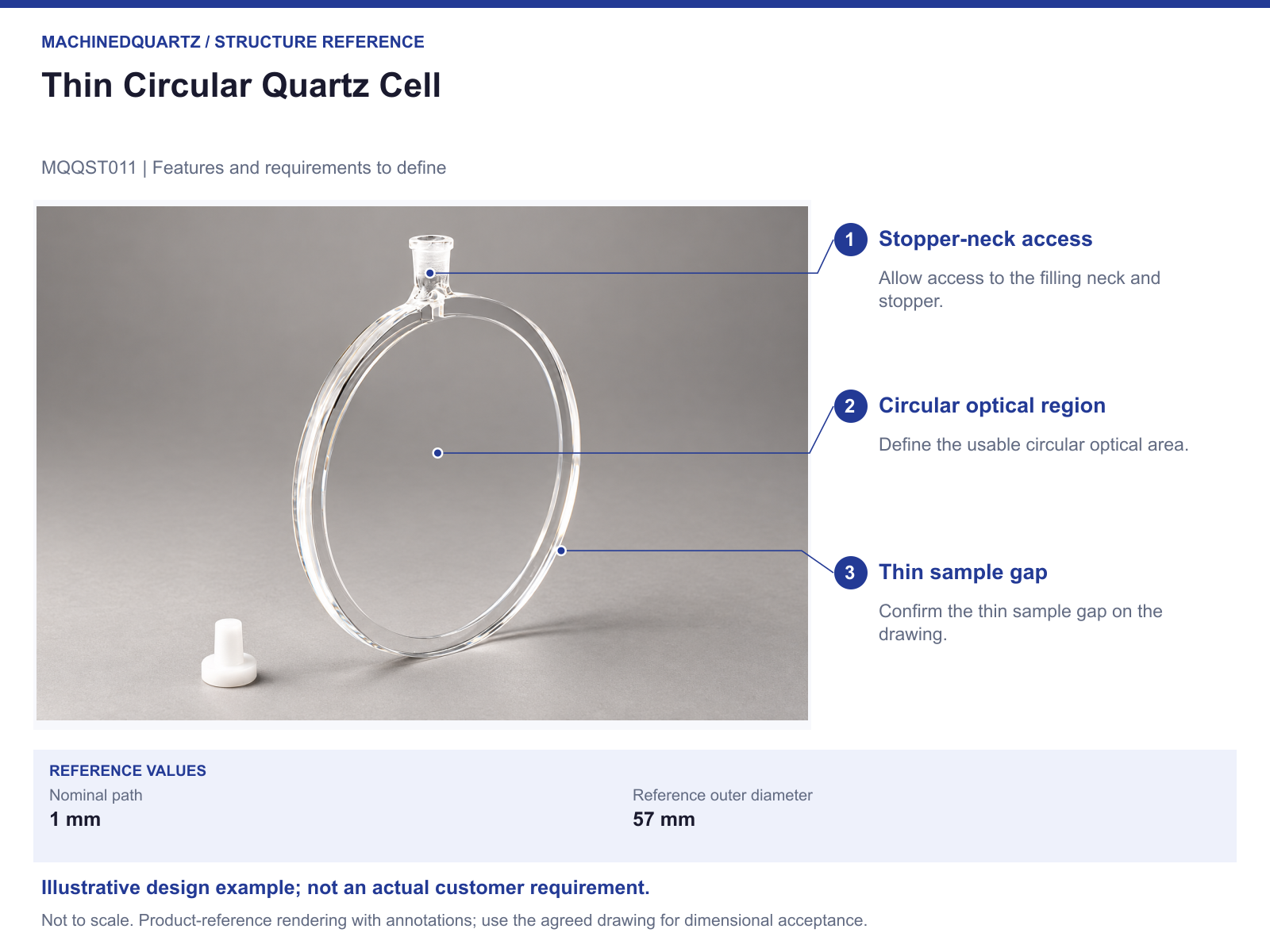
MQQST011 is a circular quartz-cell reference with a nominal 1 mm path and a stopper neck above the main body. The broad circular form calls for a different holder and filling review from a narrow rectangular cell.
The nominal gap, window boundary and neck envelope need their own drawing references. A thin sample space does not by itself establish the required fill volume or a bubble-free preparation method.
In this guide: Configuration · Design comparison · Locate the usable region inside the circular outline · Plan filling through the neck · Support the rim without obscuring the window · Agree the gap and closure checks · Enquiry
The configuration discussed here
What changes from the simpler form?
A broad circular window distributes the thin sample space differently from a narrow rectangular cell. The holder must locate the rim and leave neck access while preserving the required illuminated region.
Locate the usable region inside the circular outline
Show the required illuminated area and its position within the circular body. The outside diameter is a holder dimension, while the clear sample region and path describe the optical task.
A replacement should be referenced to the actual holder seating and beam position. Similar circular outlines do not establish the same window quality, gap or alignment.
Plan filling through the neck
Identify the proposed loading tool and the space available above the stopper neck. The method needs a way to reach the sample gap without treating the full outside body as liquid capacity.
If bubble control or recovery of a small sample matters, state the preparation requirement for review. The geometry alone is not a demonstrated filling result.
Support the rim without obscuring the window
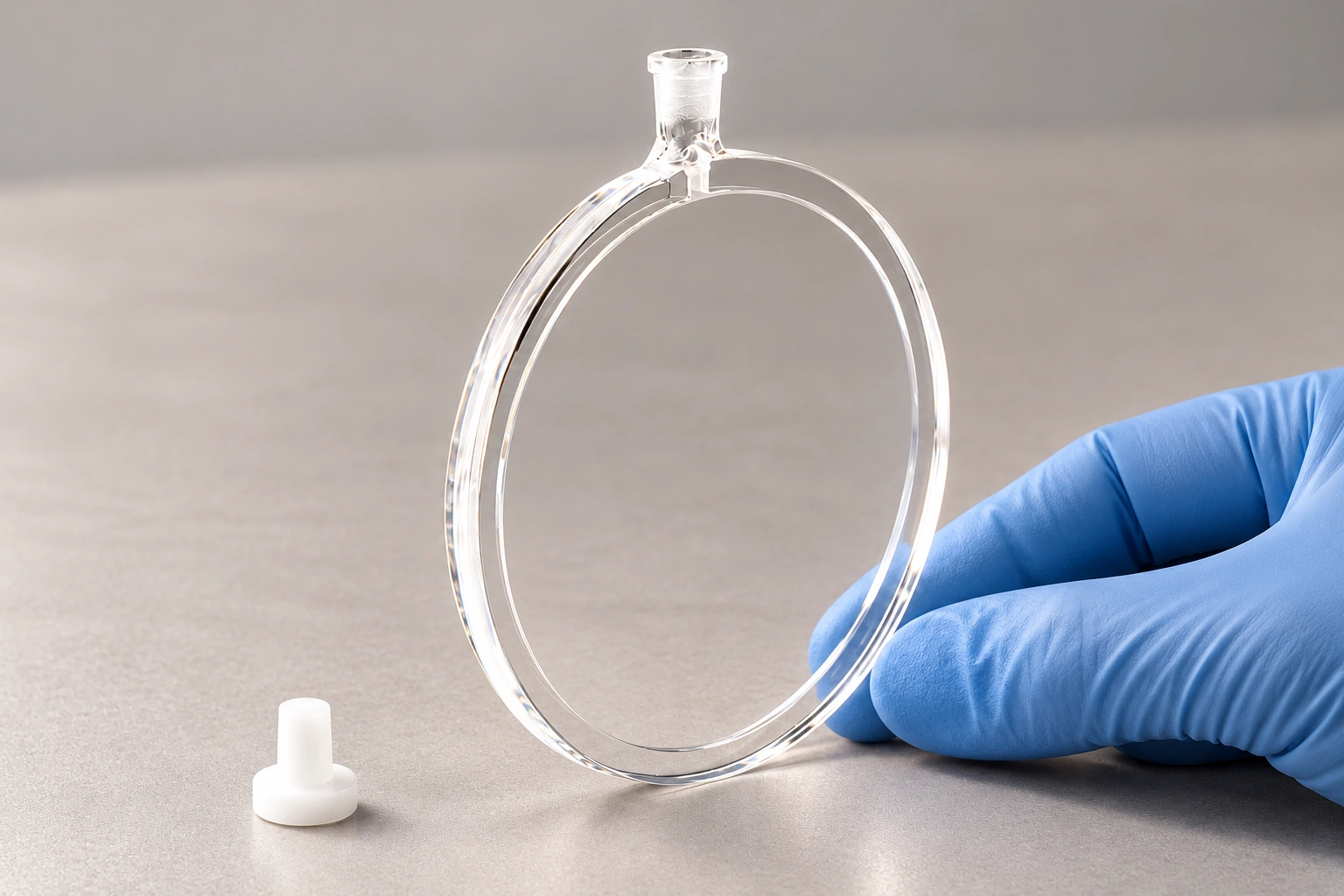
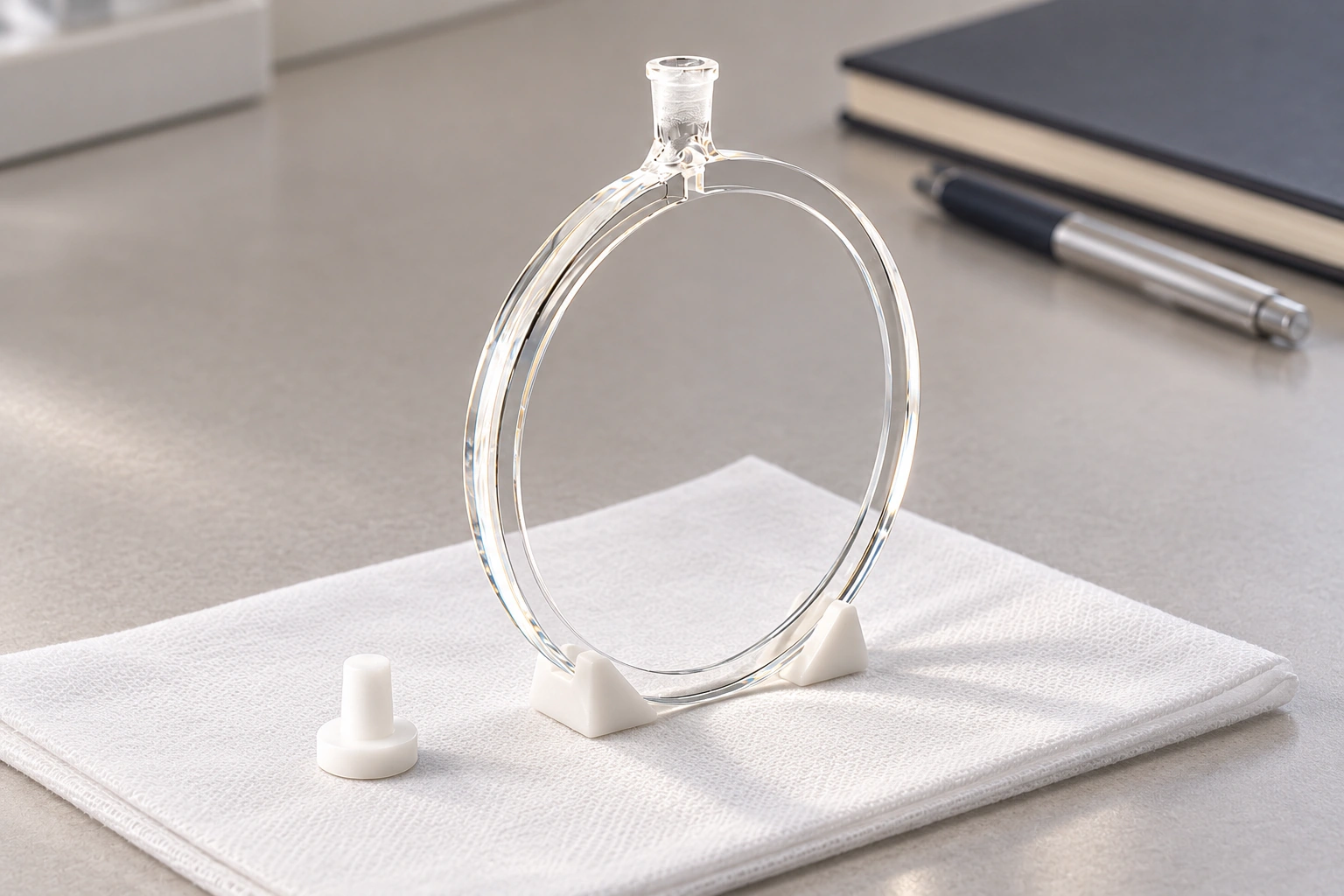
Mark the allowed contact region, insertion direction and stopper-removal space. The holder should be reviewed with the cell in its intended orientation, including any lid or cover above it.
For example, a custom outside rim could be considered where the circular window is suitable but the existing support does not locate it well. The optical gap and window acceptance would still need to be specified separately.
Agree the gap and closure checks
If the 1 mm path is critical to the method, define the required accuracy and acceptance approach. A nominal listing is not a measured tolerance record.
The stopper and seat also need their own material and closure requirements. MQ can review those with the sample conditions and requested documentation rather than assuming an airtight or pressure-rated assembly.
Structure reference and specification points
Download the structure reference (PDF)
Does the 1 mm path mean that only a tiny volume is required?
It describes the nominal gap. The actual fill depends on the chamber, neck and required covered area; specify the working sample and preparation requirement separately.
Send a drawing or the mating-part details
Send the holder section and desired illuminated area with the filling method. MQ can review the broad window, thin gap and neck access together.
- Required illuminated area and holder datum
- Path and window acceptance requirements
- Loading tool, working fill and bubble-control requirement
- Rim contacts and stopper clearance
- Sample conditions, closure and inspection scope
Modified designs are reviewed for the project. The drawing, supplied parts, quantity, inspection scope, price and preparation or production time are agreed in the quotation.
Details to settle for the ordered configuration
Path accuracy, minimum fill, closure performance and instrument fit require agreement for the ordered cell.



Recent Comments